Since 2026, smart helmets have entered a new upgrade cycle. They are no longer simple protective gear with added Bluetooth or cameras, but have evolved into four clear segments: motorcycle riding, outdoor sports, industrial safety, and AR experiences.
Recently, many global brands have launched new models. Yet what now defines the user experience is no longer displays or communication features—it is the battery, especially battery life, safety, weight, and scene adaptability. From everyday riding to industrial work and AR use, different smart helmets now rely on distinct battery solutions.
Motorcycle Smart Helmets: Hidden Battery Design Balancing Experience and Battery Life
Motorcycle smart helmets are currently the most mature consumer segment. Key user needs include:
maintaining aerodynamic performance, lightweight design, stable power supply at high speeds, and all-day battery life. Recently, several flagship products have made clear breakthroughs in battery integration.
Shoei GT-Air 3 Smart (AR Smart Helmet)
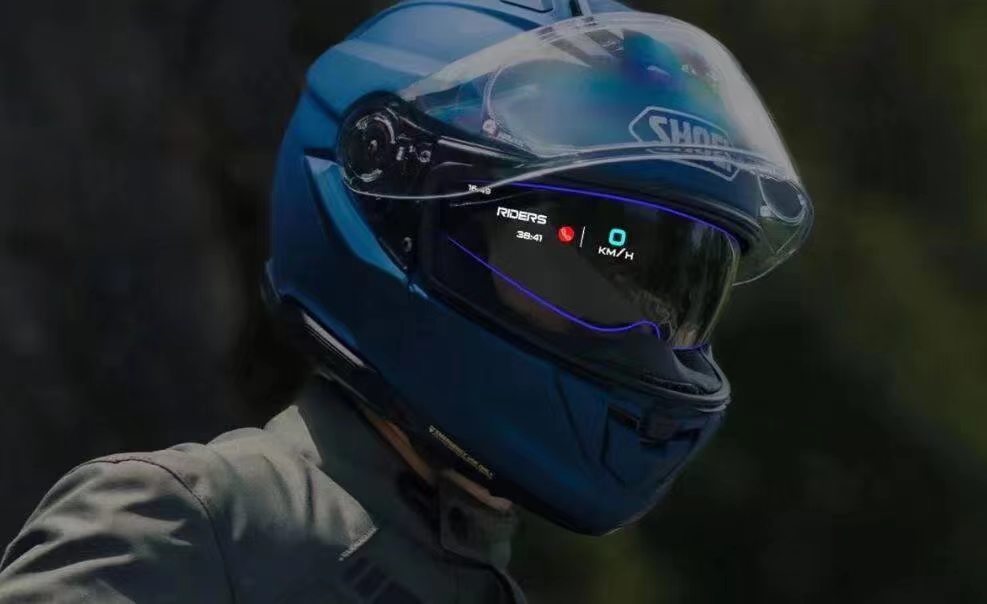
- AR display, communication module, and battery are fully built-in, with no external attachments
- Custom-shaped soft pouch battery fits into the EPS liner
- 10+ hours of battery life without increasing helmet size or wind resistance
- Designed for long-distance riding, all-day AR navigation, and clear communication at high speeds
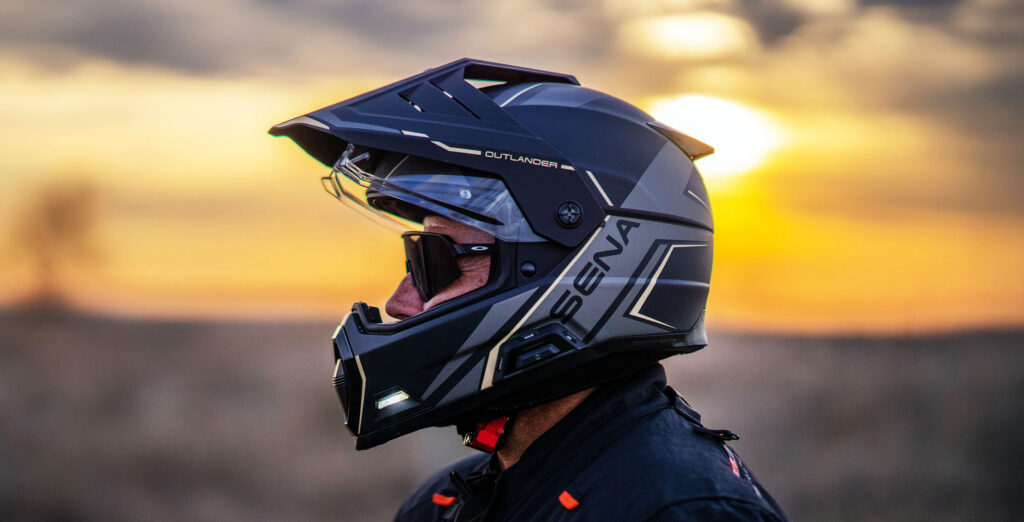
Sena Outlander Dual Sport
- Designed for both road and off-road riding
- Removable modular battery, rated IP67 for water and dust resistance
- Mesh intercom: 10 hours | Bluetooth talk time: 17 hours
- Fully charges in 2.5 hours, ideal for group riding and long tours
Meituan Keeta Overseas Delivery Smart Helmet (Brazil pilot)
Proven to support full-day use from 8:00 a.m. to 8:00 p.m., with accident detection and SOS emergency alerts integrated
- Optimized for riders with high-frequency commuting and all-day operation
- High-precision BMS with overcharge, over-discharge, and short-circuit protection
- Type-C fast charging for quick top-ups between deliveries
Sports Smart Helmets: Lightweight First, Balancing Battery Life and Wearing Comfort
Sports smart helmets for cycling, skiing, and electric skateboarding all face the same core challenge: the trade-off between lightweight design and battery life.
Users do not want heavy helmets, yet still expect continuous use of features such as music, group communication, safety lights, and crash detection. As a result, lightweight, high–energy-density batteries have become a standard solution for this category.
1. Rilax RU-1 Pro Cycling Smart Helmet
A benchmark product in the consumer sports helmet market, designed to balance weight and endurance.
- Strictly controlled overall weight
- Uses a custom 3.7V lightweight lithium polymer battery
- Small cell size delivers:
- 12 hours of music playback
- Up to 2,000 m Mesh group communication
- Stable connection for up to 8 riders
- Type-C fast charging, 80% charge in 2 hours
- Ideal for urban commuting and outdoor group cycling
2. Livall RS1 Ski Smart Helmet (Optimized for Cold Weather)
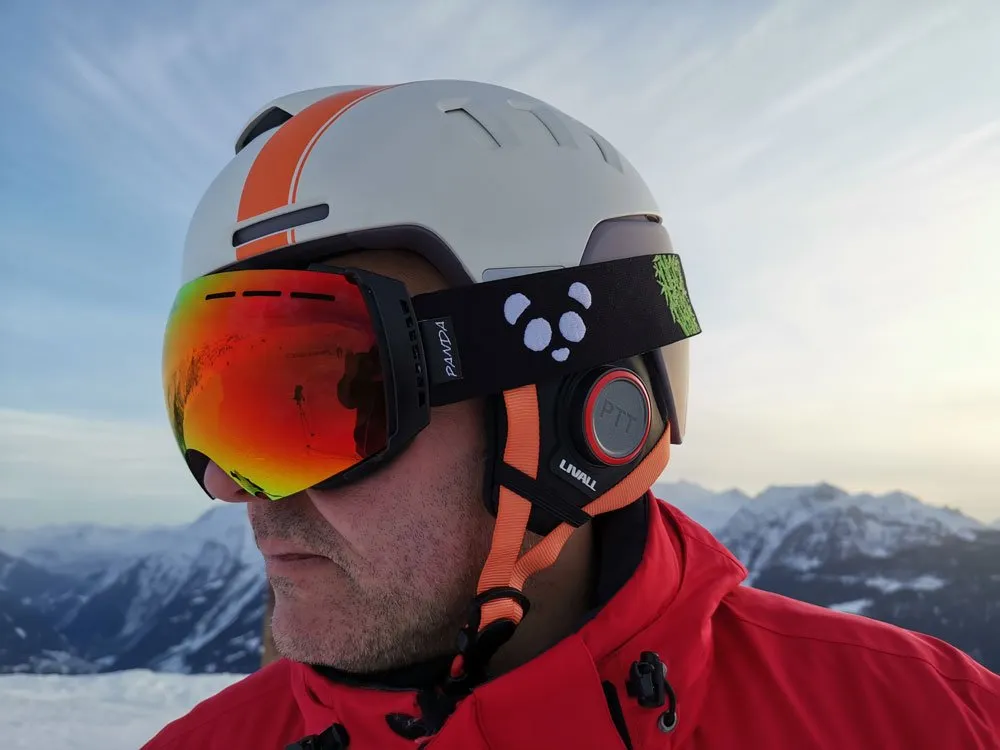
Designed specifically for low-temperature and extreme outdoor conditions.
- Built-in 1000mAh polymer battery
- Maintains over 80% discharge efficiency at –10°C
- Up to 16 hours of base battery life, suitable for full-day skiing
- Integrated fall detection and automatic SOS alert system
- With heating assistance enabled, still delivers 12 hours of stable operation
- Well suited for skiing and cold-weather outdoor sports
3. Lumos Nyxel Electric Skateboard Smart Helmet
Focused on short-distance travel and night riding, with an emphasis on energy efficiency.
- Balances practicality with low power consumption
- Innovative integrated lighting and battery design
- Built-in 1100mAh lithium battery
Battery life adjusts automatically based on lighting mode: Up to 14 hours in flashing mode
Meets safety lighting needs for night commuting and short trips
Industrial Smart Helmets: Explosion-Proof and Long Battery Life as Mandatory Standards
Industrial smart helmets have become the most active innovation segment in recent months, widely used in power inspection, construction, mining, chemical plants, and utility tunnels—high-risk working environments.
Unlike consumer products, industrial smart helmets focus on just two core battery requirements:
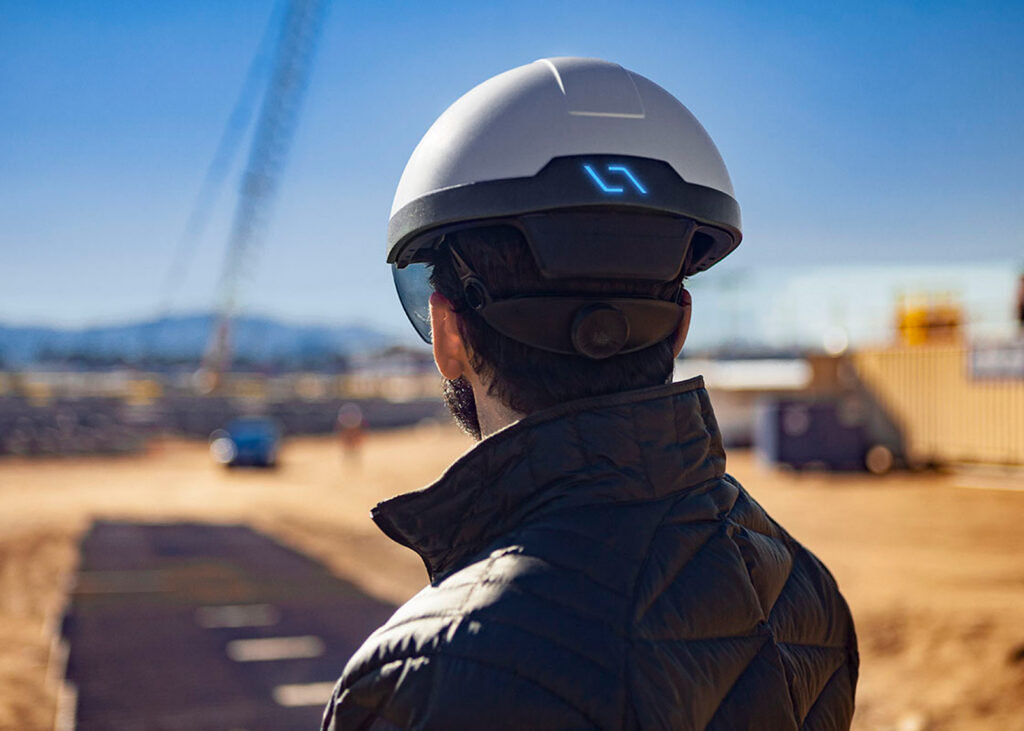
- Intrinsic safety and explosion-proof reliability
- Ultra-long battery life with uninterrupted operation
As a result, hot-swappable batteries, dual-battery redundancy, and intrinsic safety (Ex-proof) certification have become standard features in high-end models.
1. Jinan Zhiye Outdoor Engineering Smart Safety Helmet
Designed for all-day, high-intensity outdoor operations, with a strong focus on eliminating power interruptions.
- Built-in 3600mAh high-capacity battery
- Supports 20 hours of continuous video recording
- Maintains stable discharge even at –20°C
- Dual-battery hot-swapping design:
- Battery replacement without powering off
- No interruption to monitoring or operations
- Rated IP68 for water and dust resistance, with drop protection
- Suitable for harsh construction sites and outdoor environments
2. Shanghai Juxing Explosion-Proof 5G Smart Helmet
Built for oil, chemical, and mining industries, emphasizing system-level redundancy and certified safety.
- Equipped with a 10000mAh dual-battery redundant system
- Main and backup batteries switch automatically in 0.5 seconds
- Over 24 hours of standby time
- Battery certified for Zone 1 intrinsic safety (Ex-proof):
- No electrical sparks
- Safe for flammable and explosive gas environments
- Supports 5G HD real-time video streaming and remote monitoring
- A core smart device for high-risk industrial operations
3. Other Representative Solutions: Differentiated Battery Optimization
Well suited for power utilities and utility tunnel applications
Sifutai G2 Series
Uses ultra-low-power algorithms to achieve up to 30 days of standby time, ideal for routine site inspections and low-frequency usage scenarios.
Luopute Smart Safety Helmets
- Explosion-proof battery with triple circuit protection
- Integrated UWB high-precision positioning
- Balances safety, battery life, and precise operation management
AR/VR Smart Helmets: High-Density Batteries
AR/VR immersive smart helmets are currently the most technically advanced category.
High-resolution displays, real-time interaction, data transmission, and always-on sensors create extremely high power consumption. The key challenge is: how to achieve long battery life within a lightweight form factor.
Recently, new products have mainly adopted three solutions to overcome this bottleneck:
- High energy-density battery cells
- Distributed power supply architecture
- Hot-swappable batteries with fast charging
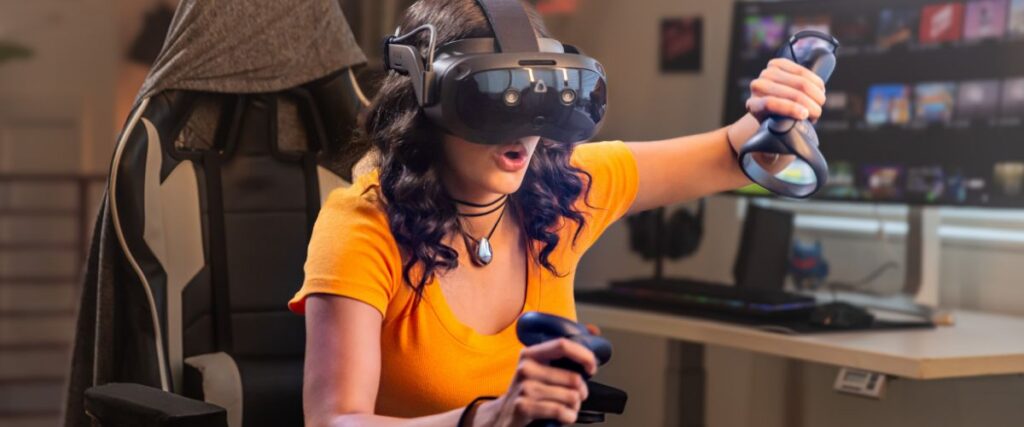
Representative Products & Battery Solutions
1. HTC Vive Focus Vision VR Headset
This model uses a distributed battery design to improve weight balance and wearing comfort.
- Replaces traditional head-mounted centralized battery design
- Uses a rear-mounted distributed battery layout to balance weight
- Over 2 hours of total battery life
- Up to 2.5 hours in video use cases
- Supports 10-second hot-swappable battery replacement
- Built-in backup cell ensures uninterrupted operation
- Equipped with 30W PD fast charging
- Recharges 50% in 15 minutes
- Effectively reduces battery anxiety in immersive applications
2. Anduril EagleEye Military AR Helmet
Designed for military-grade extreme environments, focusing on safety and continuous operation.
- Uses a split battery system:
- Head-mounted lightweight battery for short-term use
- Chest-mounted main battery pack for extended operation
- Supports 6–8 hours of continuous mission time
- Equipped with high-safety ceramic battery technology:
- Impact-resistant
- Puncture-resistant
- Non-flammable
- Meets strict safety and endurance requirements in extreme military scenarios
3. Samsung Galaxy Glasses AR (Leaked Concept)
A consumer AR wearable focused on improving energy density and thermal management.
- Expected to redefine battery standards for consumer AR wearables
- Uses silicon-carbon anode + graphene thermal battery solution
- Significantly improves energy density
- Up to 12 hours of light-use battery life
- Around 4 hours under heavy AR interaction
Industry Key Trends: Battery Technology Defines the Upper Limit of Smart Helmets
Based on global product launches in the past month, it is clear that the smart helmet industry has moved away from “feature stacking” and parameter competition. Instead, it has entered a new stage of battery-driven, scenario-based customization. Three major trends are now emerging:
1. Clear scenario segmentation with highly customized battery solutions
Different use cases require completely different battery designs:
- Consumer cycling helmets focus on lightweight design and long battery life
- Sports helmets prioritize low power consumption and fast charging
- Industrial helmets require explosion-proof safety and redundant battery systems
- AR helmets need high-density batteries and distributed power supply
Battery technology paths are now fully differentiated across each segment.
2. Safety redundancy has become a basic requirement
Battery safety is no longer an added feature—it is a minimum standard for all smart helmets.
- Consumer helmets use multi-layer circuit protection
- Industrial helmets require intrinsic safety (explosion-proof design) and dual-battery switching systems
- Redundant power design is now widely adopted across high-end products
3. High energy density, hot-swapping, and low power consumption are key upgrade directions
The next phase of innovation will focus on:
- Silicon-carbon high-voltage battery cells
- Ceramic-based high-safety battery systems
- Distributed power architectures
- Hot-swappable battery replacement
- AI-based low-power consumption algorithms
These technologies are expected to become the main upgrade directions for smart helmets in the second half of 2026.
Conclusion
Today’s smart helmets are no longer just head protection tools. They have evolved into intelligent wearable devices that integrate sensing, communication, display, positioning, and safety warning functions. At the core of all these capabilities, the battery directly defines the product’s performance ceiling.
As industrial intelligence advances, outdoor riding and sports become more mainstream, and AR immersive technologies continue to grow, scenario-based battery innovation will keep driving the evolution of the smart helmet industry. In the future, battery solutions that balance lightweight design, high safety, long battery life, and fast charging will become the key competitive advantage for brands.
If you are developing smart helmets or other wearable devices, and are looking for custom battery solutions tailored to different application scenarios, we can support you with full engineering customization—from structure design to performance optimization.
Let’s build safer, lighter, and longer-lasting power solutions together.
Email: [email protected]
Whatsapp: +86 18938252128
