CES has always been a place where ideas collide.
Every year, thousands of companies arrive in Las Vegas with polished prototypes, bold concepts, and a shared belief that technology can still surprise the world. CES 2026 was no exception. But this year felt different—more grounded, more practical, and more focused on real-world integration rather than futuristic hype.
For BluePower, CES 2026 was not just an exhibition. It was a conversation. A conversation with product designers who are struggling with space constraints, engineers who are pushing energy density to its limits, and innovators who refuse to let power design dictate creativity.
As a battery manufacturer specializing in custom-shaped lithium polymer battery solutions, we came to CES with one goal: to listen, to share, and to explore how custom power is quietly shaping the next generation of products.
CES 2026: A Shift from “What’s Possible” to “What Works”
Walking through the exhibition halls, one thing became clear very quickly:
the industry is maturing.
Instead of flashy concepts designed only to attract attention, many exhibitors were showcasing products already close to mass production—smart wearables with refined ergonomics, compact robotics with tight internal layouts, medical devices designed for long-term reliability, and consumer electronics focused on comfort and usability.
And behind almost every one of these products was the same question:
“How do we fit enough power into this form factor—without compromising design?”
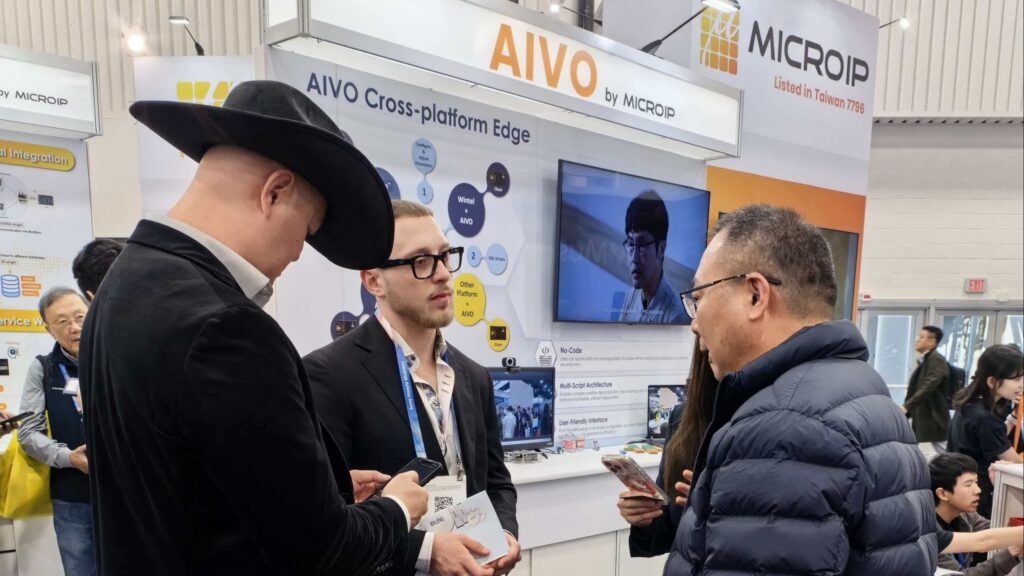
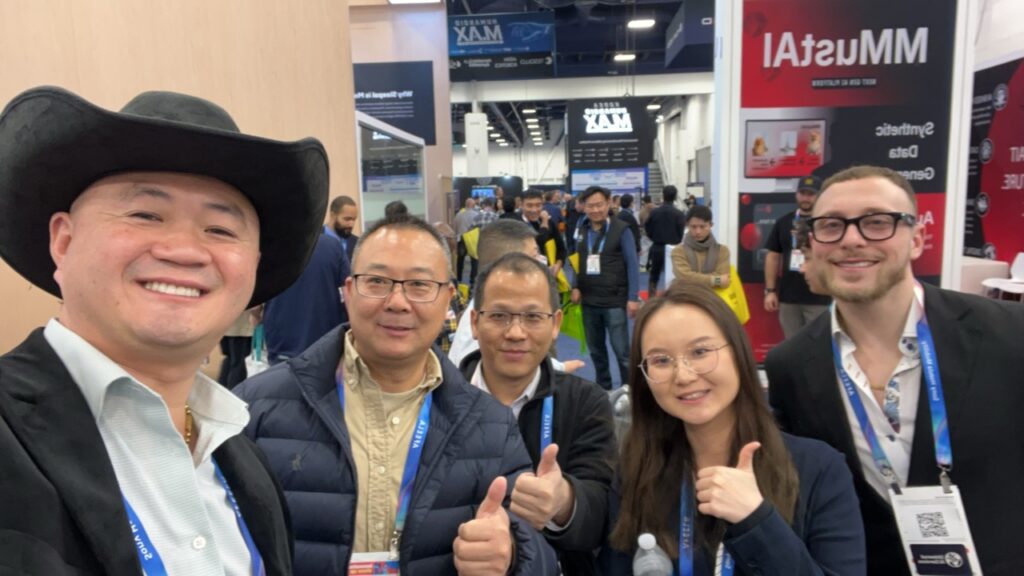
This question came up again and again at the BluePower booth.
Why Power Design Is Now a Product Design Problem
Ten years ago, battery selection often came late in the product development process. Designers would finalize the enclosure first, then ask engineers to “find a battery that fits.”
That approach no longer works.
Today’s devices are:
- thinner
- lighter
- more compact
- more ergonomically complex
Standard cylindrical or rectangular batteries are often the first limitation, not the last consideration.
At CES 2026, we spoke with:
- industrial designers frustrated by rigid battery formats
- hardware engineers juggling performance, safety, and space
- startup founders realizing too late that off-the-shelf batteries won’t support their vision
This is exactly where custom-shaped batteries come in.
BluePower At CES 2026
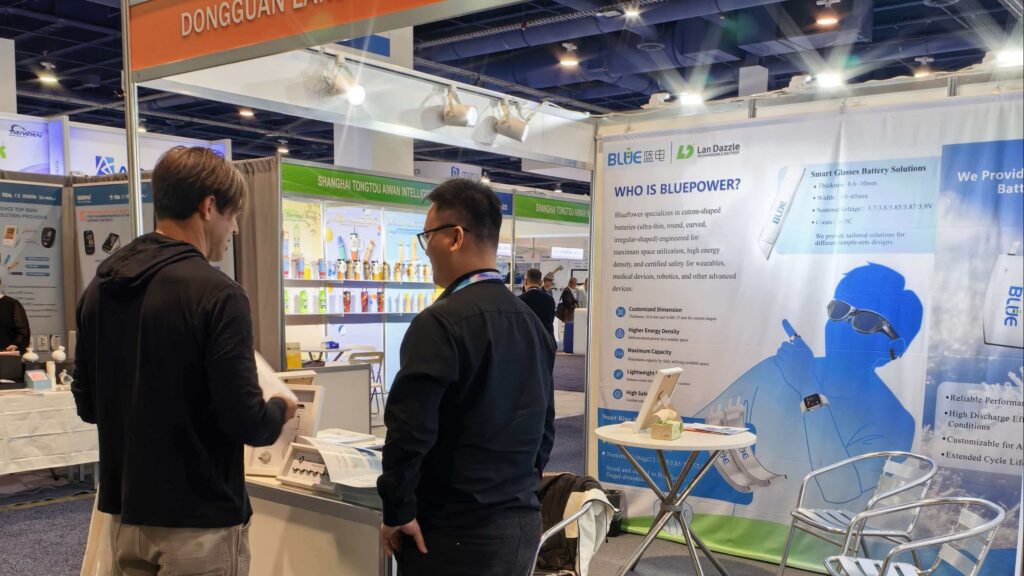
Rather than focusing on a single product, BluePower showcased capabilities.
We presented a range of custom lithium polymer battery solutions, including:
- curved and arc-shaped batteries
- ultra-thin pouch cells
- irregular and asymmetric battery designs
- batteries optimized for wearables, smart devices, and compact electronics
Each sample told a story—not just of chemistry, but of collaboration.
Behind every custom battery is a process:
- understanding the device structure
- analyzing power requirements
- balancing energy density, thickness, and safety
- iterating alongside the customer’s design timeline
This process sparked many in-depth discussions at CES, especially with designers who had previously assumed that battery shape was “non-negotiable.”
Conversations That Stood Out
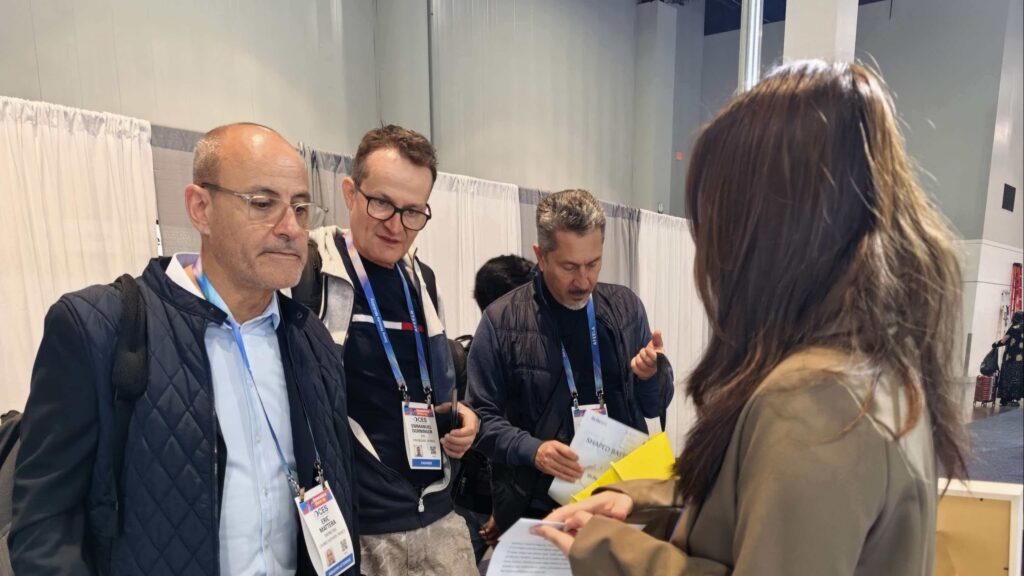
One of the most valuable parts of CES is what happens between scheduled meetings.
A product designer working on a next-generation wearable told us:
“The battery is the last rigid part in our design. Everything else has evolved.”
An engineer developing a compact robotic module shared:
“We can optimize motors and control boards endlessly, but battery volume still defines our limits.”
These conversations reinforced something we already believe at BluePower:
custom power is not a luxury—it’s becoming a necessity.
Custom-Shaped Batteries: More Than Just Geometry
Many people still think custom batteries are simply about shape. In reality, shape is only one part of the equation.
At CES 2026, we discussed how custom battery design also involves:
- voltage and capacity matching
- discharge rate optimization
- thermal behavior in confined spaces
- cycle life expectations
- integration with BMS and protection circuits
For example, a curved battery for a wearable device must not only fit the enclosure—it must maintain consistent performance across daily charging cycles, body temperature variations, and long-term use.
This level of customization requires close collaboration between battery engineers and product teams, something BluePower has built its business around.
The Growing Role of Lithium Polymer Batteries
Lithium polymer batteries continue to dominate applications where flexibility matters.
Compared to traditional formats, LiPo batteries offer:
- flexible form factors
- lighter weight
- high energy density
- better integration into compact designs
At CES 2026, we saw LiPo batteries being used in:
- smart wearables
- portable medical devices
- IoT hardware
- consumer electronics
- compact robotics
What stood out was not the chemistry itself—but how creatively it was being applied.
From Concept to Production: What B2B Customers Really Need
One recurring theme from our CES discussions was uncertainty.
Many B2B customers are not just looking for a battery—they’re looking for guidance:
- Is this shape manufacturable?
- Can this thickness support our required capacity?
- How will scaling affect consistency?
- What certifications should we plan for early?
BluePower’s role is not limited to manufacturing. We act as a technical partner, helping customers avoid costly redesigns and late-stage surprises.
CES 2026 reminded us that early battery involvement can significantly reduce development risk.
Innovation Happens When Constraints Are Removed
Some of the most inspiring moments at CES were when designers realized they had more freedom than they thought.
When battery shape becomes adaptable:
- industrial design becomes more ergonomic
- internal space utilization improves
- product differentiation becomes easier
Several visitors left our booth rethinking their internal layouts—not because we promised something unrealistic, but because custom power opened options they hadn’t considered before.
That mindset shift is powerful.
What CES 2026 Tells Us About the Future of Custom Power
If CES 2026 showed us anything, it’s this:
The future of innovation is integration.
Power, structure, and user experience are no longer separate disciplines. They are deeply interconnected. Custom-shaped batteries sit at the intersection of all three.
As devices continue to shrink while expectations grow, standard solutions will increasingly fall short.
Custom power is no longer about edge cases—it’s becoming part of mainstream product development.
Looking Ahead: BluePower’s Commitment
CES 2026 was energizing, but it was also grounding.
It reminded us why BluePower exists:
- to support designers when standard batteries are not enough
- to help engineers translate ideas into reliable power solutions
- to collaborate, iterate, and problem-solve alongside our customers
We left CES with new insights, new connections, and renewed motivation to push custom battery solutions further.
Let’s Build the Next Generation Together
Whether you are:
- designing a wearable with a curved enclosure
- engineering a compact device with tight internal space
- innovating in a field where power cannot be standardized
BluePower is ready to explore what custom power can do for your product.
CES 2026 was just one chapter.
The real innovation happens after the exhibition lights turn off.
And we’re excited for what comes next.
Email: [email protected]
Whatsapp: +86 18938252128
