In 2025, smartphone manufacturers began to systematically adopt and promote one of the most important battery innovations of recent years: silicon carbon battery. Once regarded as an experimental technology or limited to a handful of flagship models, Si-C batteries are now increasingly appearing in more affordable devices. As a result, users can enjoy significantly higher battery capacity without increasing device thickness or weight. Battery life—once a relatively abstract specification—is becoming a tangible and decisive factor in how users choose their devices.
Silicon Carbon Battery Trends in Smartphones
Silicon-carbon (Si-C) batteries are a relatively new technology. Until not long ago, their production cost was higher than that of traditional lithium-ion and lithium polymer batteries. This was especially clear in the early stage of commercial use: higher energy capacity, combined with a brand-new electrochemical system, meant that Si-C batteries were mainly used only in flagship smartphones, and their price was naturally higher. At that time, they were seen as another clear “premium feature” of high-end phones, just like top-tier processors or advanced camera systems.
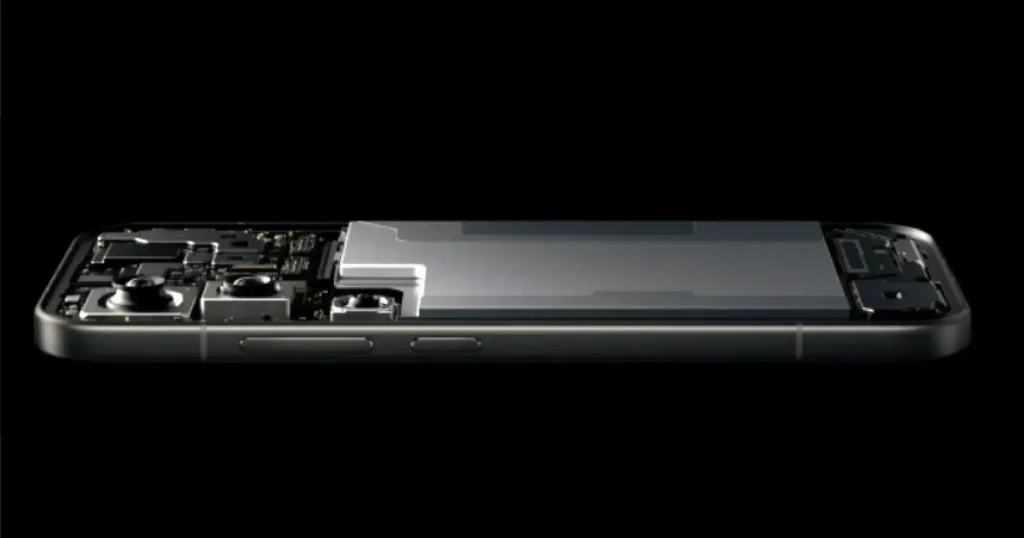
However, by 2025, the situation has changed a lot. With expanding production capacity, continuous improvements in manufacturing processes, and strong competition among smartphone brands, the adoption of silicon-carbon batteries has accelerated significantly. Today, these batteries are no longer limited to flagship models. They are increasingly being used in mid-range and even entry-level smartphones.
For Chinese smartphone makers, this shift is not only a strong marketing advantage, but also a real technical benefit. After all, longer battery life is easy to promote and is also something users care about a lot.
Real-World Examples in Current Devices
Many current models already demonstrate this trend:
- Xiaomi Redmi Note 15 Pro+ – 6,500 mAh
- OnePlus 15 – 7,300 mAh
- HONOR Magic 8 Pro – 7,200 mAh
- OPPO Find X9 – 7,025 mAh
- realme GT 8 Pro – 7,000 mAh
These are only representative examples. The number of smartphones adopting Si-C batteries continues to grow rapidly. Most importantly, 6,000–7,000 mAh capacities are no longer exclusive to devices priced above USD 1,000. They are steadily entering more affordable segments of the market.
Just a few years ago, a smartphone priced around USD 160 offering standout battery life was considered exceptional. At that time, battery capacities above 5,000 mAh were still relatively rare. Today, capacities approaching 7,000 mAh are becoming increasingly common, gradually establishing a new industry baseline.
Why Higher Capacity Truly Matters
The real-world impact of these capacity gains should not be underestimated. Even if software optimization or system efficiency on some Chinese smartphones does not always match that of their competitors, the raw numbers speak for themselves. An additional 10%–20%, and in some cases up to 30%, increase in battery capacity can translate into several extra hours of screen-on time—or comfortably support two full days of moderate use without recharging.
Ultimately, silicon–carbon batteries do far more than improve specifications on paper. They reshape everyday smartphone usage and restore battery life as a decisive competitive advantage for users.
Limitations of Traditional Lithium-Ion Technology
For more than two decades, lithium-ion batteries have been the dominant battery technology.
The key factor limiting further improvement is the graphite anode.
Although graphite-based systems are highly mature and offer clear advantages:
- Low cost
- Stable manufacturing processes
- Extensive experience in mass production
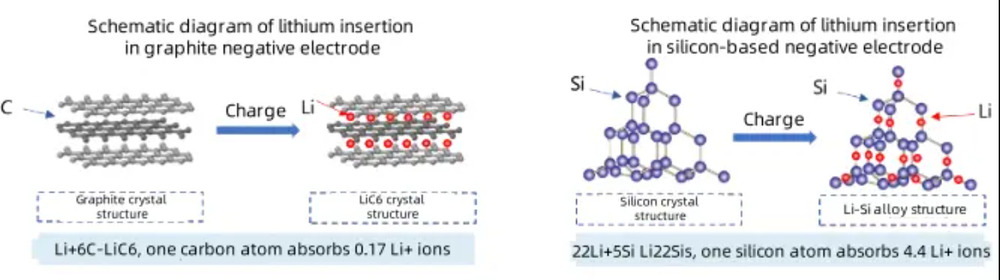
their theoretical specific capacity is only about 372 mAh/g. This physical limit directly restricts further increases in battery energy density.
As a result:
To significantly increase capacity, manufacturers are often left with only one option—Make the battery larger, thicker, and heavier.
Why doesn’t this approach work for smartphones?
Smartphones place especially strict constraints on batteries, mainly because:
- Devices continue to become thinner and lighter
- Internal space is heavily occupied by key components:
- High-refresh-rate displays
- Multi-camera systems
- High-performance processors
- Complex thermal and structural designs
Under these conditions:
- Available battery space keeps shrinking
- Simply “making the battery bigger” is no longer realistic
Although battery life can be improved to some extent by:
- Increasing chip energy efficiency
- Optimizing system and software power consumption
these methods only improve usage experience, and cannot fundamentally break the energy-density limit.
Why has the industry started focusing on silicon anodes?
To overcome the limitations of graphite, the industry began exploring alternative materials, with silicon becoming one of the most promising options:
- Silicon has a much higher theoretical specific capacity than graphite
- It has the potential to store significantly more energy in the same volume
- In theory, it is well suited for space-constrained devices like smartphones
However, the drawbacks are also clear:
- Silicon undergoes large volume expansion during charge and discharge
- This can lead to:
- Material cracking
- Structural pulverization
- Rapid loss of cycle life
As a result, pure silicon anodes are difficult to apply at large scale.
How do silicon-carbon (Si-C) anodes address this problem?
Silicon-carbon anodes are essentially a practical and balanced solution:
- Silicon is integrated into a carbon-based structure
- Carbon helps buffer silicon’s volume changes
- This achieves a balance between:
- Higher capacity
- Acceptable cycle life
- Improved structural stability
More importantly:
- No complete overhaul of existing production lines is required
- Upgrades can be made gradually on top of current lithium-battery processes
- This makes large-scale commercialization much easier
Why Silicon–Carbon Instead of Pure Silicon
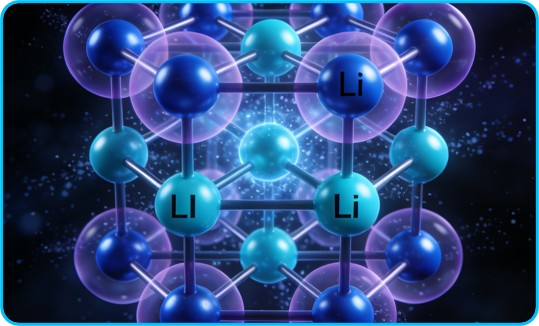
From an electrochemical perspective, silicon is almost tailor-made for high-energy-density batteries.
- Silicon can store far more lithium ions than traditional graphite
- Its theoretical specific capacity is about 4,200 mAh/g, several times higher than graphite
This means that battery energy density can be significantly increased without increasing battery size. For engineers, this is extremely attractive. If silicon could be used effectively in real products, it could fundamentally change expectations for battery life in smartphones and other portable devices.
The real challenge comes from how silicon behaves during actual battery operation. During charge and discharge, silicon experiences dramatic volume changes:
- During charging:
- Silicon absorbs lithium ions
- Its volume can expand by up to 300%
- During discharging:
- The material rapidly shrinks again
This repeated expansion and contraction creates strong mechanical stress inside the electrode, leading to a chain of problems:
- Cracking of the material structure
- Poor electrical contact inside the electrode
- Accelerated performance degradation
As cycling continues, the silicon anode structure is gradually “pulled apart”:
- Micro-cracks increase over time
- Electrical contact between active material and the current collector is damaged
- Internal resistance keeps rising
The final results are much faster battery aging, a sharp reduction in usable charge–discharge cycles and noticeable capacity loss in a relatively short time. This is why pure silicon anodes remained in the laboratory for a long time.
Even though pure silicon anodes show impressive capacity in lab tests, they fail to meet key requirements in real-world applications:
- Long-term cycle stability
- Structural reliability
- Operational safety
Because of these fundamental weaknesses, pure silicon anodes have not been suitable for large-scale commercial use.
What truly enabled silicon to move toward commercialization was combining it with carbon materials. Silicon-carbon (Si-C) anodes do not completely replace graphite with silicon. Instead, they:
- Introduce silicon into a carbon-based structure
- Use engineering design to control silicon’s volume changes
- Combine this with:
- Nano-structured designs
- Specialized binder systems
This approach is essentially a trade-off between performance and reliability.
In a silicon-carbon structure, carbon acts like a “scaffold”:
- It buffers silicon expansion during charging and discharging
- Stabilizes the overall electrode structure
- Ensures long-term operational reliability
As a result, silicon-carbon batteries can achieve in real applications:
- A clear increase in energy density
- Reduced mechanical stress during cycling
- Battery life maintained at an acceptable level
Under current technological conditions, these batteries typically deliver about a 10%–25% capacity improvement, while maintaining stability and safety.
Benefits of Using Silicon Carbon Battery in Smartphones
For end users, the advantages of silicon–carbon batteries go far beyond higher milliamp-hour (mAh) numbers on a spec sheet. Their benefits are most noticeable in everyday use—not just when comparing specifications in a store.
Longer, More Reliable Battery Life
First and foremost, Si-C batteries deliver meaningfully longer real-world battery life. Thanks to higher energy density and more stable power output, a smartphone equipped with a nominal 5,000 mAh Si-C battery can outperform devices using conventional lithium-ion cells. Lower energy loss, improved efficiency at low charge levels, and slower capacity degradation allow more of the stored energy to be usable in daily scenarios—from video streaming and gaming to navigation and productivity tasks.
Faster and More Stable Charging
Another key advantage is faster, more consistent charging performance. Silicon materials can handle higher charging currents more effectively, enabling high-power fast-charging with improved efficiency. This allows manufacturers to increase charging speeds without significantly raising battery temperature or accelerating degradation. For users, it means shorter charging times with fewer trade-offs between charging speed and long-term battery health.
Greater Design Flexibility
Si-C batteries also give smartphone manufacturers greater freedom in device design. Brands can either significantly extend battery life without increasing device size, or create thinner and lighter devices without sacrificing runtime. This makes Si-C batteries well suited for both mainstream models focused on endurance and premium flagship devices with slim profiles and complex internal layouts.
A Better Everyday Experience
For users, all of this translates into a more predictable and convenient experience: fewer charging sessions throughout the day, better performance under peak loads, and faster recovery when plugged in. This is the core value of silicon–carbon batteries—they don’t just improve specifications, they fundamentally improve how modern smartphones are used.
Beyond Smartphones: Silicon Carbon Batteries for Compact Devices
While silicon carbon batteries are gaining attention in the smartphone industry, their advantages extend far beyond. For devices where space is limited—such as smart wearables, AR/VR glasses, or portable wireless chargers—silicon carbon technology offers a critical edge.
At BluePower, we have designed and developed silicon carbon batteries specifically for these compact devices, achieving mass production with remarkable energy density up to 778 Wh/L. This allows small devices to benefit from longer runtime and higher performance without increasing size, making silicon carbon batteries a key solution for the next generation of space-constrained electronics.
We also integrate advanced low-expansion technology, which mitigates volume changes during charging cycles and enhances battery longevity—an essential factor for compact, high-performance devices. If your product requires a reliable, space-efficient energy solution, our team can collaborate with you to develop a tailored silicon carbon battery that meets your unique requirements.
Email: [email protected]
Whatsapp: +86 18938252128
Conclusion
Silicon–Carbon (Si–C) batteries are a rare technology that combines genuine innovation with benefits users can immediately experience. They already deliver tangible advantages: longer battery life, faster charging, and greater design flexibility for manufacturers.
In the coming years, this technology is likely to become the new standard for flagship smartphones, gradually replacing traditional graphite anodes. Although questions remain regarding battery lifespan and cost, the overall industry trend is clear: the future of smartphone batteries is increasingly dependent on silicon-based materials.
