In the development of wearable technology, helmets have always been a special category. They are not only protective gear, but also an entry point for information. For a long time, however, most helmet upgrades focused on materials, structure, and safety performance, while “intelligence” stayed at a supporting level.
Recently, an AI-driven smart helmet system released by Anduril has brought this category back into the spotlight. It integrates augmented reality displays, multi-sensor fusion, real-time communication, and mission-level command functions. This turns the helmet from a passive piece of equipment into a continuously operating intelligent computing node.
This shift means that smart helmets are undergoing a fundamental transformation. But behind all the discussed technological breakthroughs, there is one basic question becoming more and more important—and still often overlooked: is the smart helmet battery system truly ready to support such a complex and demanding intelligent device?
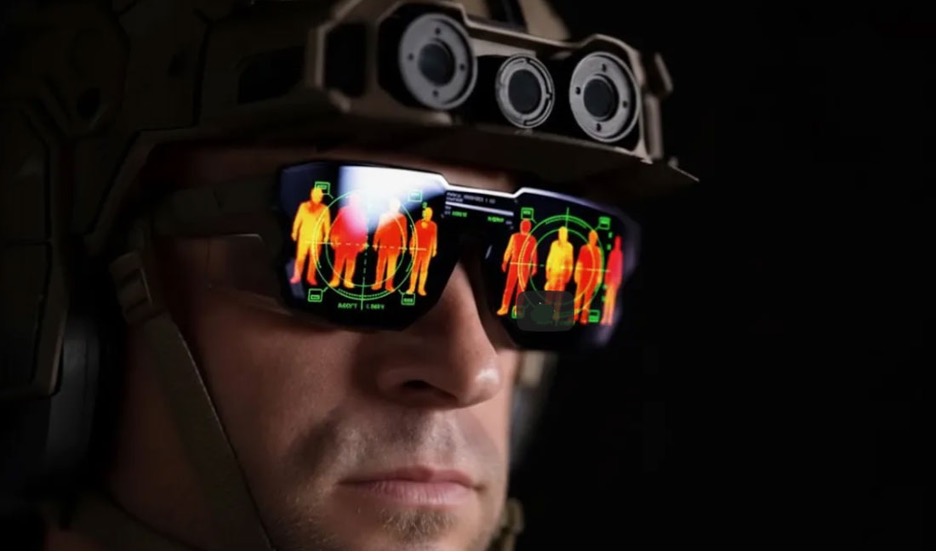
Smart helmets are becoming “system-level devices.”
From a technical architecture perspective, the new generation of smart helmets shows several clear features:
Continuous computing capability: no longer activated only when needed, but running online for long periods
Multiple sensors working in parallel: vision, positioning, environment sensing, and communication operate at the same time
Real-time data processing and display: AR/HUD systems cannot tolerate noticeable delay
Networked collaboration: acting as a node within a larger system, not an isolated device
This means a smart helmet is no longer just protective equipment with added electronics. It has become a complete information system terminal.
And for any system-level device, everything eventually comes back to one core question:
Where does the energy come from, and how long can the smart helmet battery support stable operation?
Why Smart Helmet Battery Is No Longer Replaceable Components
As functions grow exponentially, the battery is no longer a “replaceable component.”
In traditional wearable devices, the battery is often treated as a standard part: as long as the capacity is enough and the size fits, it is considered acceptable. But in the case of smart helmets, this way of thinking no longer works.
1. Strong power fluctuations require much higher output stability
When AI computing, wireless communication, and display modules run at the same time, the system experiences clear power peaks and fast load changes.
If the battery cannot deliver stable output:
- Display brightness may fluctuate
- Sensor data may become unstable
- The system may be forced to reduce performance or restart frequently
These issues cannot be solved simply by using a larger capacity battery. They are directly related to battery internal resistance design, discharge curves, and structural consistency.
2. Limited helmet structure makes battery shape a design variable
Unlike smartphones or tablets, helmets place extremely strict limits on battery design:
- Irregular internal space makes standard square or cylindrical batteries unsuitable
- Weight distribution directly affects wearing comfort and safety
- Increased thickness can significantly change the head’s center of gravity
In this situation, the battery is no longer a part that is “placed inside.”
It must be a key unit involved in the overall product structure from the very beginning of the design process.
3. Complex usage environments demand maximum safety and reliability
Smart helmets often operate in conditions such as:
- Outdoor high and low temperatures
- Long-term contact with the human body
- Vibration, impact, sweat, and rain
This places much higher demands on the smart helmet battery system than typical consumer electronics, including:
- Thermal stability
- Mechanical strength
- Multiple protection mechanisms
- Long-term cycle consistency
If a failure occurs, the result is not just device malfunction—it may directly affect the safety of the wearer.
Standard Batteries Are Becoming a System Bottleneck for Smart Helmets
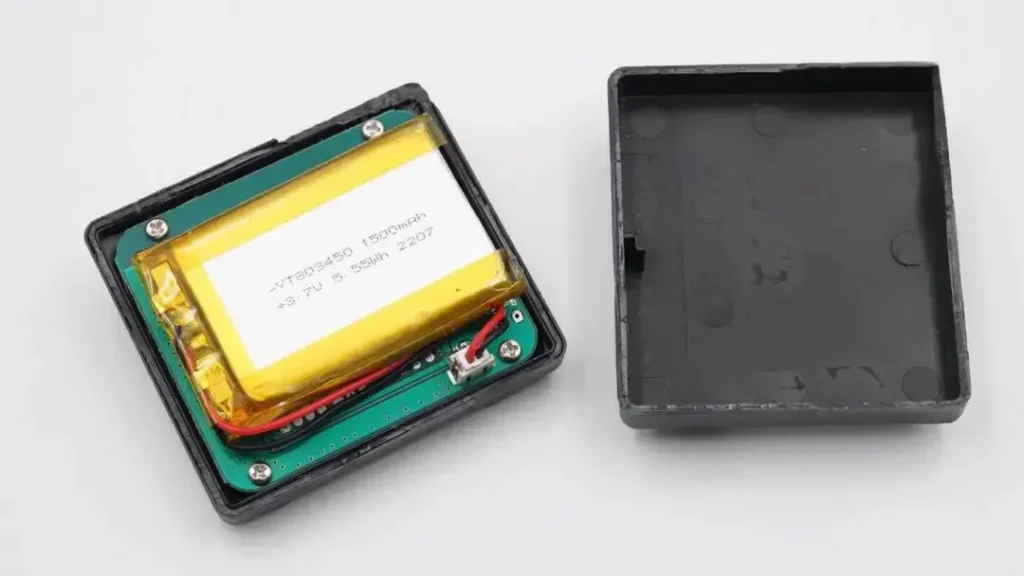
Under the technical conditions described above, more and more smart helmet projects are realizing a clear reality during development:
the performance limit of the whole device often does not come from computing power, algorithms, or sensors, but from the power supply system.
At the prototype stage, standard batteries can often “barely support” system operation. But as more functions are added and real-world use becomes more demanding, their limitations quickly become visible.
From an engineering point of view, the main strengths of standard batteries are controlled cost and high universality. They work well for mature, stable consumer electronics with clear requirements. Smart helmets, however, do not fall into this category. In terms of structure, power demand, and safety, they show clear non-standard characteristics.
- First, there is the issue of size and structural fit.
The internal space of a helmet is usually irregular, and weight distribution is extremely important. Standard batteries are often placed passively, rather than designed for the structure. This can reduce internal layout efficiency or place weight in poor positions, affecting wearing comfort and long-term user experience. - Second, there is a mismatch between discharge behavior and real power demand.
Smart helmet power usage is not linear. AI processing, communication, and display modules create strong power fluctuations. Standard batteries are designed for general loads, and under frequent high-rate discharge and fast power switching, they may suffer voltage drops, lower efficiency, or trigger system throttling and protection, reducing overall performance stability. - More importantly, there are limits in safety design.
Head-worn devices stay close to the human body for long periods, so heat control and safety margins must be much higher than in ordinary electronics. Standard battery safety strategies are based on general use cases and are hard to optimize for specific wearing conditions, body contact, and duty cycles. In highly integrated, high-power-density devices, this can become a serious hidden risk.
For these reasons, more helmet and wearable projects are rethinking the role of the smart helmet battery.
It is no longer just a power source, but a system-level factor that determines whether the device can operate safely and reliably over time.
This change in thinking is pushing the industry away from “choosing a suitable battery” toward “designing the battery around the entire device system.”
The Real Value of Custom Battery Solutions
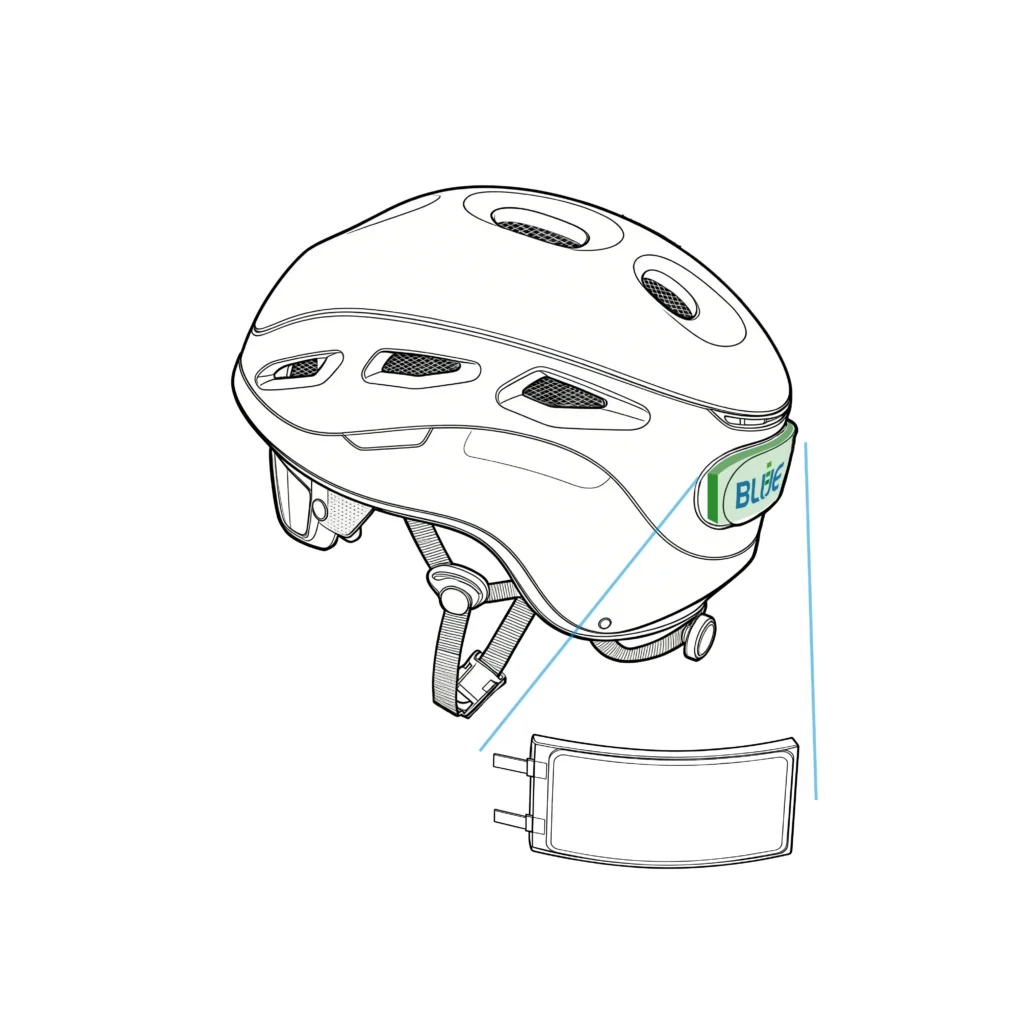
In devices like smart helmets, the value of a custom battery is not simply that it has a “different shape.”
Its real value lies in solving practical problems that standard batteries repeatedly create in real projects—and that are hard to avoid.
In the early stage, many teams choose standard batteries because:
- they are easy to buy
- they can power up the system
- they can run demos
The question is usually not “does it work,” but what happens when the product enters real-world use. That is when many problems start to appear at the same time.
Structural coordination: not just “fitting in,” but “working well after it fits”
In smart helmet projects, batteries face several real constraints:
- irregular internal space
- very limited thickness
- poor comfort if weight is concentrated on one side
With standard batteries, the result is often this:
to fit the battery, the team must compromise the internal structure or accept a poor center of gravity.
What custom batteries actually do:
- adjust or split cell shapes based on available space
- distribute weight more evenly
- avoid changing the entire product design just to fit a battery
This is not about appearance. It directly determines whether the helmet can be worn comfortably for several hours.
Electrical coordination: solving the “works in the lab, fails in the field” problem
The power profile of a smart helmet is very different from that of typical wearables:
- AI inference causes sudden current spikes
- communication modules create periodic peak loads
- displays and sensors stay online for long periods
Many teams experience this situation:
the system runs fine on the test bench, but when multiple modules work together, voltage drops, restarts, or performance limits appear.
This is usually not a processor or software issue.
It happens because the battery’s discharge capability does not match the real power demand.
The value of a custom battery is that it:
- is designed based on the actual power consumption curve
- keeps voltage stable under peak load
- reduces forced throttling used to protect the system
The result is simple and clear:
the device is not just “able to run,” but able to operate continuously in real-world conditions.
Safety coordination: head-worn devices allow almost no battery failure
Helmets are worn close to the head for long periods, which means:
- even small temperature rise is noticeable to users
- users cannot simply move away from the device if something goes wrong
- a single safety incident can cancel an entire product line
Standard battery safety designs are usually “general-purpose”:
- made for phones or handheld devices
- based on fixed usage positions
- assuming controlled cooling conditions
Smart helmets do not meet these assumptions.
The real value of custom batteries is that they:
- adapt thermal and protection design to the wearing scenario
- reduce local heat concentration through structure and materials
- make safety design fit the device, instead of forcing a standard solution
This is not an extra feature—it is often a basic requirement for mass production of head-worn devices.
Lifetime coordination: not about numbers, but about “when it starts to feel worse”
Many batteries look good on spec sheets, but common problems after product launch include:
- noticeably shorter runtime after a few months
- growing performance differences between devices in the same batch
- battery aging affecting system stability
The reason is simple:
standard lifetime tests often do not reflect real usage patterns.
Custom batteries focus not on “higher rated cycle life,” but on:
- optimizing operating ranges based on real charge and discharge behavior
- reducing the most damaging usage conditions
- making performance degradation more predictable and consistent
For the product, this means:
user experience declines slowly and in a controlled way, instead of suddenly becoming unreliable.
Conclusion
The rise of AI smart helmets is not an isolated event.
Smart glasses, industrial head-worn devices, and medical assist helmets are moving along a similar technical path:
stronger sensing, more complex system design, and longer periods of stable operation.
Under this trend, what truly determines whether a product can succeed is often not the most eye-catching technology, but the basic parts that quietly define the system’s limits.
The battery is one of those parts.
For the smart wearable industry, future competition will no longer be only about “who has more features,” but about:
- whose system is more stable
- whose wearing experience feels more natural
- whose device can run reliably for long periods in real environments
And all of these questions eventually come back to one core idea:
was the battery designed as part of the system from the very beginning?
If you are building similar devices
If you are developing or evaluating products such as:
- AI smart helmets or smart glasses
- industrial or professional head-worn equipment
- smart wearables with high demands on battery life, safety, and structure
and you have already faced issues like unstable runtime, heat limits, structural compromises, or mass production risks, then fixing problems late in the process is rarely the best solution.
It is often better to think through battery system design early, at the system level.
If you would like to have a technical discussion about battery system design for smart wearable devices—
whether for early-stage concept review or for analyzing existing problems—you can get in touch through the following channels:
Email: [email protected]
Whatsapp: +86 18938252128
