In 2026, the AI glasses market remains competitive. Brands like Ray-Ban Meta, Rokid, RayNeo, and INMO continue to release new products.
Yet one key challenge remains: battery life.
Most AI glasses still run for only a few hours. Despite advanced AI features and high-resolution displays, small batteries limit real-world use. For devices meant to be worn all day, battery life defines the user experience—and it is still the biggest barrier to mass adoption.
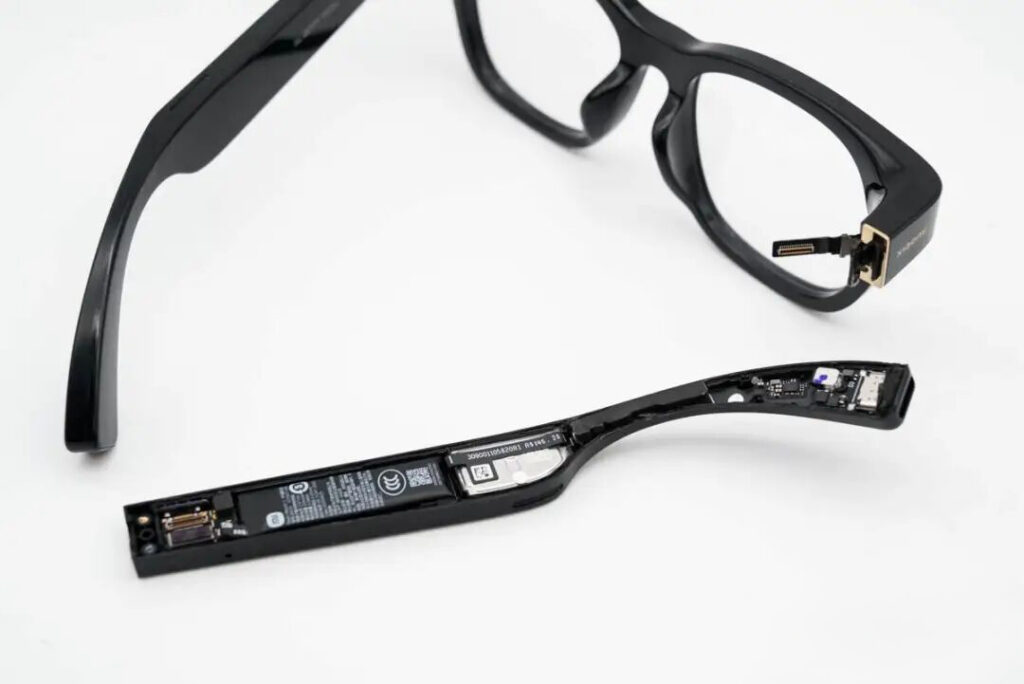
The “Impossible Triangle” of AI Glasses
The battery problem of AI glasses is essentially a three-way trade-off between lightweight design, powerful features, and long battery life. These three factors limit each other and form an “impossible triangle” that is very hard to solve at the same time.
User expectations are clear—but extremely demanding:
- Glasses should be as light and comfortable as normal eyewear, even after long hours of use
- They should offer smartphone-level features, including AI, display, camera, and interaction
- They should provide all-day battery life, always ready without battery anxiety
With today’s technology, meeting all these demands at once is almost impossible.
In reality, manufacturers must make difficult compromises:
- Improving battery life often means making the device heavier
- Keeping the glasses light means reducing battery capacity
- More powerful features lead to higher power consumption
As a result, most AI glasses have clear weaknesses and fail to fully meet users’ core needs.
Lightweight Design vs Battery Capacity: The Root Cause of Limited Battery Life
As a wearable device, comfort is the foundation of long-term use. For this reason, almost all manufacturers treat extreme lightweight design as their top priority.
Today’s mainstream AI glasses are very aggressively optimized for weight:
- Total weight is usually limited to 40–50 grams, similar to normal glasses
- Models with displays are typically around 50 grams
- Models without displays can be as light as around 40 grams
This extreme focus on weight leads to an unavoidable result: very limited internal space.
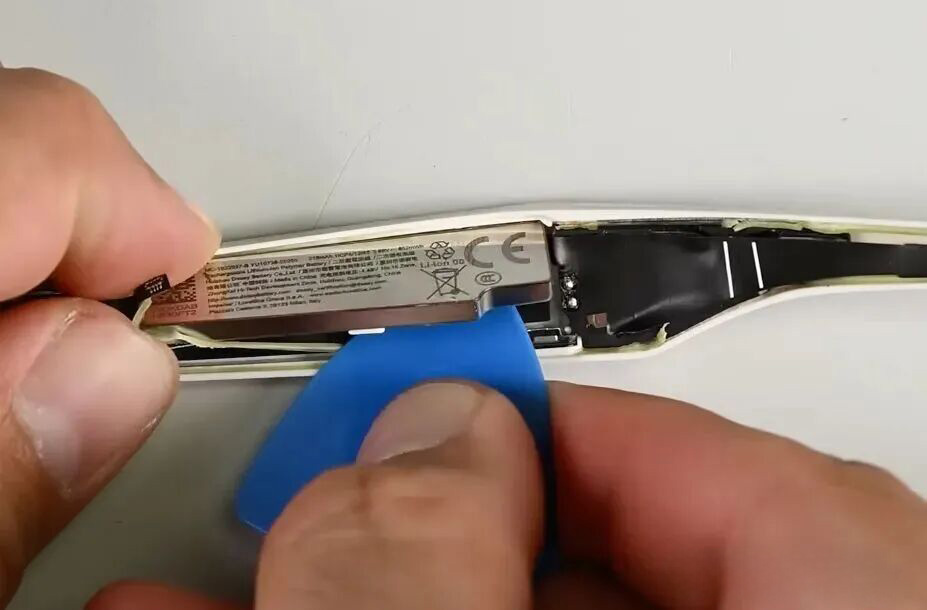
The temples of the glasses are especially critical. They must hold key components such as the chip, battery, and antennas. But with such slim structures, very little space is left for the battery. In other words, the maximum battery capacity is already fixed at the design stage.
Limited Battery Size Means Poor Battery Life
The lack of space directly leads to disappointing battery performance in daily use. Based on media reports and product tests, most AI glasses today offer:
- Around 2–6 hours of typical usage
- Some products claim longer life, but only in very light or ideal scenarios
In real use, different functions affect battery life very differently:
- Continuous voice interaction, photos, or video → fast battery drain
- Display and AI computing running together → battery life drops sharply
- In heavy-use scenarios, the battery often cannot last even half a day
For users who need long, continuous use, this level of battery life is clearly not enough.
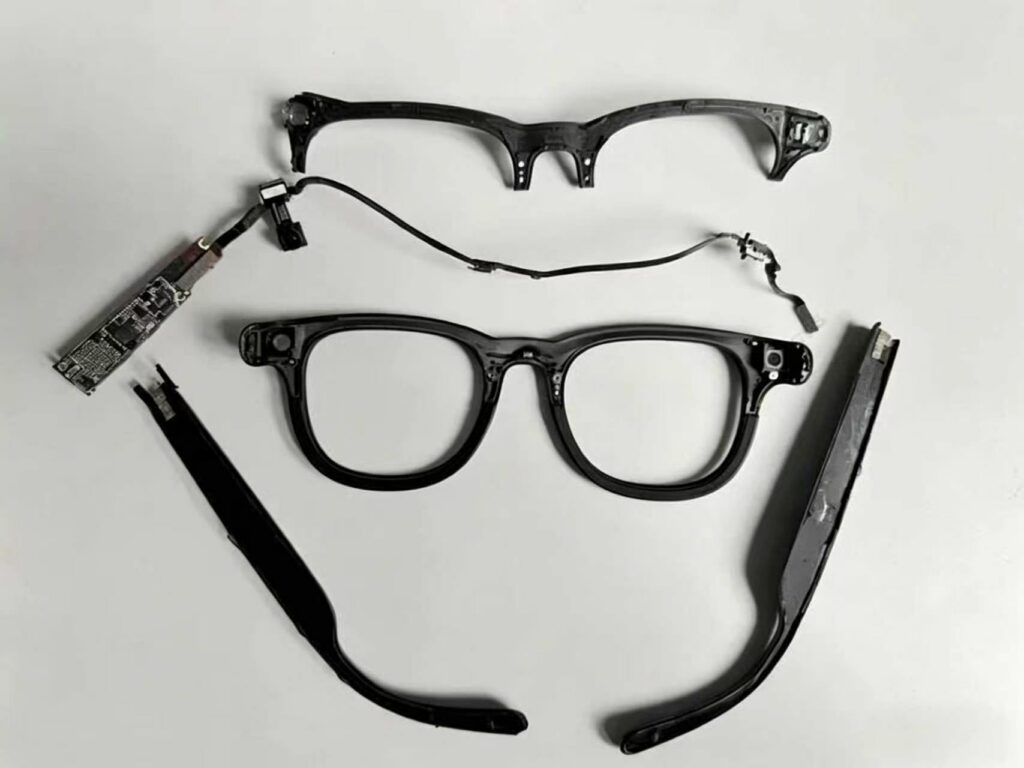
Battery Anxiety Is Limiting Real Usage Scenarios
Short battery life is not just an inconvenience—it directly affects user confidence and usage habits.
In critical moments, low battery can become a serious experience problem:
- Glasses shutting down during outdoor navigation
- Real-time translation stopping in an important meeting
- Recording or capturing key moments suddenly failing
To avoid these situations, users are often forced to:
- Turn off high-power features
- Reduce how often they use the device
- Carry a power bank as a backup
As a result, AI glasses are downgraded from an “always-on smart device” to a niche product that requires constant battery checks, making it hard to truly fit into daily life.
On-Device AI Models Will Make the Problem Worse
More importantly, this issue is not improving—it is getting more serious. As on-device AI models become a key selling point of AI glasses, features such as:
- Voice recognition
- Image understanding
- Real-time translation
- Multimodal interaction
require the chip to run at high load, which significantly increases power consumption.
Even with better algorithms and power management, manufacturers can only reduce the problem slightly. They cannot solve it at the root. In this context, the battery is no longer just a “supporting component”. It has become the key bottleneck that decides whether AI glasses can move from early adopters to the mass market.
How Batteries Set the Limit of AI Glasses
Many users ask the same question:
Why do AI glasses keep adding new features, while battery life shows no real breakthrough?
From an industry perspective, talking about product experience without considering hardware limits is unrealistic. In fact, many AI glasses never make it past the concept stage—not because the AI models are weak or the displays are poor, but because of a quiet yet extremely hard engineering challenge: the battery.
No matter how advanced the on-device AI model or how sharp the display is, everything depends on the battery for power. Battery performance directly defines the intelligence ceiling of AI glasses.
This limitation mainly shows up in three areas:
- Weight allocation
- Thermal management
- Structural limits of current battery technology
1. Extreme Weight Limits Lock Battery Capacity
For AI glasses designed to be worn all day, total weight usually must stay within 40–50 grams. This limited weight budget must be carefully shared among all key components.
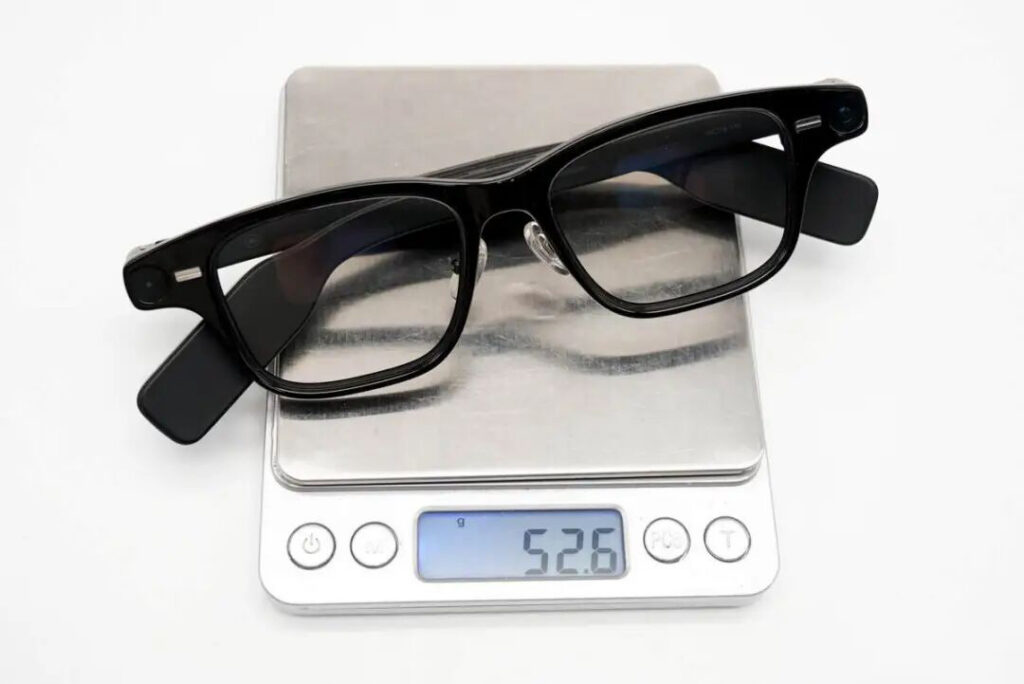
A typical breakdown looks like this:
- Optical lenses + display module: about 15–20 g
- Front frame, microphones, camera modules: about 10 g
- Mainboard, chip, sensors, hinges: about 5–8 g
After all of this, only a few grams are left for the battery.
And even those grams must include:
- Aluminum-plastic film
- Stainless steel or other casing materials
The actual active material used for energy storage is very limited. As a result, battery capacity stays low.
That is why most AI glasses today have battery capacities in the range of:
- 200–450 mAh
This level of capacity is far from enough for long, high-load AI usage.
2. Thermal Limits Make Bigger Batteries Risky
Beyond weight, thermal management makes the battery problem even harder.
When AI glasses run on-device AI models, two heat sources appear at the same time:
- Heat from the chip under heavy load
- Heat from the battery during charging and discharging
According to wearable device safety standards:
If a device that touches the skin reaches around 46°C or higher, there is a risk of low-temperature burns.
AI glasses face serious structural limits:
- Temple arms are only a few millimeters thick
- Heat dissipation paths are very short
- There is almost no space for active cooling
If the battery has high internal resistance, sudden high current demand from AI computing can create strong Joule heat. This heat often concentrates near:
- The temples
- The skin behind the ears
This not only hurts comfort, but also raises safety concerns.
3. “Making It Bigger” Is Not a Real Solution
Some suggest increasing hardware size to fit a larger battery—but in reality, this does not work.
The trade-offs are obvious:
- Thicker temples reduce wearing comfort
- Heavier frames increase long-term fatigue
- The product no longer feels like normal glasses
This goes against the core logic of wearable devices.
There is also a structural issue:
- Traditional pouch batteries waste 2–3 mm on sealing edges
- This further reduces usable battery volume
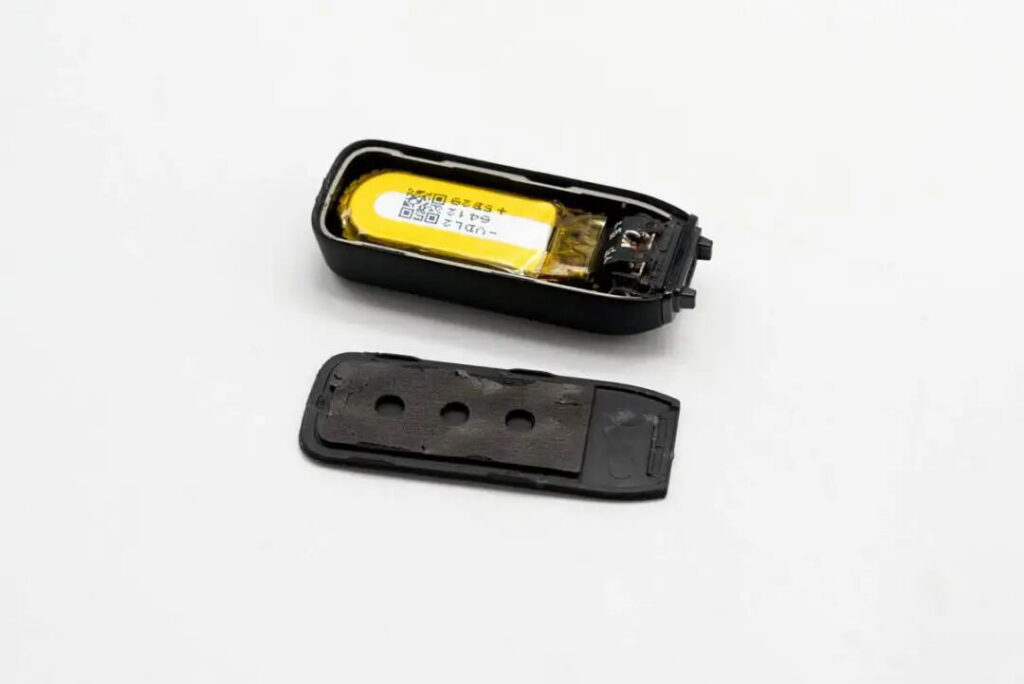
Some brands are testing dual removable batteries and magnetic battery swapping designs. However, these approaches increase manufacturing cost and raise the risk of sweat ingress and connection failures. They are difficult to scale for mass consumer products.
A strong real-world example is Galaxy Glasses (model EB-O200). According to available information, the battery capacity is as low as 245 mAh.
This single number clearly shows the current hardware reality of AI glasses:
- Even with strong chip optimization
- Even with deep experience in power control
Battery capacity is still extremely hard to increase. This proves that powerful computing and rich features mean little without enough battery support.
A New Path Forward Driven by Innovation and Industry Reshaping
Despite the strong limitations imposed by batteries, the AI glasses industry has not stood still. Battery manufacturers are actively seeking breakthroughs across materials, manufacturing processes, and battery form factors, aiming to ease the battery life bottleneck. At the same time, growing competition in global supply-chain capacity is quietly laying the foundation for the next wave of industry growth.
Although many challenges remain, continued technological progress and gradual capacity expansion give AI glasses a real chance to break free from battery constraints and move toward true mass adoption.
Battery Innovation as the Core Driving Force
Technological innovation from battery manufacturers has become the key to breaking the deadlock. To increase battery capacity without adding extra weight, many suppliers are focusing on combining:
- High-voltage cathode materials
- High-capacity silicon-based anodes
One representative approach is the use of 4.55V high-voltage lithium cobalt oxide cathodes paired with high-capacity silicon anodes, aiming to balance long battery life with ultra-thin design. However, silicon-based materials come with serious challenges. During charge and discharge, silicon expands significantly, which can lead to:
- Battery swelling
- Increased internal resistance
- Shortened cycle life
Solving silicon expansion has therefore become a key technical challenge. To address this issue, battery makers have moved away from expensive solutions such as pre-lithiation and vapor-phase carbon coating. Instead, they are focusing on coating and manufacturing process optimization.
- Multi-layer coating techniques, which effectively control silicon expansion in mass production and improve yield
- Laser-processed micro-channel structures, first developed in China, which shorten lithium-ion transport paths
These technologies improve:
- Fast-charging capability
- High-power output
- Thermal stability
—all without increasing heat generation.
In addition, the introduction of semi-solid-state battery technology, where part of the liquid electrolyte is solidified, helps batteries pass the strict thermal safety requirements of wearable devices and further improves safety.
Packaging Innovation Unlocks More Battery Space
Advances in battery packaging are also creating new opportunities for capacity improvement. Leading consumer electronics battery suppliers have developed stacked steel-case battery designs with:
- Laser-welded sealing
- No traditional pouch sealing edges
This approach eliminates the 2–3 mm space loss seen in aluminum-plastic pouch batteries, allowing better use of the very limited space inside glasses temples.
At the same time:
- Stacked cell structures reduce internal resistance
- Lower resistance reduces heat during high-current discharge
The narrow, elongated steel-case design fits temple structures well, while offering higher energy density and better impact resistance
Emerging Charging Solutions
Low-power wireless charging is also being explored. While millimeter-wave wireless charging is still in the experimental stage, it may one day be integrated with AI glasses, fundamentally reducing battery anxiety. Together, these breakthroughs not only provide practical solutions for improving AI glasses battery life, but also drive broader innovation across the micro-battery industry.
Supply Chain Capacity and Cost Competitiveness
Changes in global supply chains and capacity competition are becoming another key support for industry growth. For micro batteries, yield loss is a major cost factor. In the early stages of adopting silicon anodes, low yields significantly increased costs. However, battery manufacturers are now building a step-by-step technology roadmap:
- Liquid high-silicon batteries
- Semi-solid-state batteries
- Fully solid-state batteries
By leveraging mature manufacturing experience and stable yields, suppliers are able to control unit battery costs and keep pricing at competitive levels This gives device makers more confidence and lowers the entry barrier for AI glasses products.
Conclusion
Overall, AI glasses have the potential to become a trillion-dollar mass-market product. Expanding application scenarios and rising user expectations continue to drive the industry forward.
Battery solutions are becoming increasingly mature, and breakthroughs by domestic manufacturers—combined with large-scale capacity deployment—are gradually weakening the battery constraint. While true all-day battery life has not yet been achieved, and large-scale delivery remains a challenge, the outlook is promising.
Over the next one to three years, as technology improves and production capacity continues to ramp up, AI glasses are expected to break free from battery limitations and achieve both functional and battery life breakthroughs.
At that point, AI glasses may truly become part of everyday life—expanding from entertainment and photography into work, communication, and real-time computing—and emerge as the next major growth engine in the wearable device market, following wireless earbuds.
Our Smart Glasses Battery Solutions
To break this limitation, we provide custom battery solutions designed specifically for AI smart glasses, focusing on two key technologies:
- Irregular stacked battery design
By using custom-shaped, stacked cell structures, we maximize energy density within extremely limited internal space—without increasing thickness or weight. - Silicon-carbon anode technology
Compared to traditional graphite anodes, silicon-carbon anodes significantly improve capacity, enabling longer battery life while maintaining safety and cycle stability.
If you are developing next-generation AI glasses and struggling with size, weight, or battery life constraints, our smart glasses battery solutions are built to help you go further.
👉 Contact us to explore a battery design tailored to your product.
Email: [email protected]
Whatsapp: +86 18938252128
