Global Market Overview: The Competition Behind the 4 Million Unit Market
The smart ring market is entering a period of rapid growth. According to market data, the global smart ring market was valued at approximately $416.9 million in 2025 and is expected to reach $3.77 billion by 2034, representing a compound annual growth rate (CAGR) of 29.30% during the forecast period.
Driven by the growing demand for health monitoring, AI-powered wearable devices, and connected smart ecosystems, smart rings are gradually evolving from niche technology products into mainstream consumer devices.
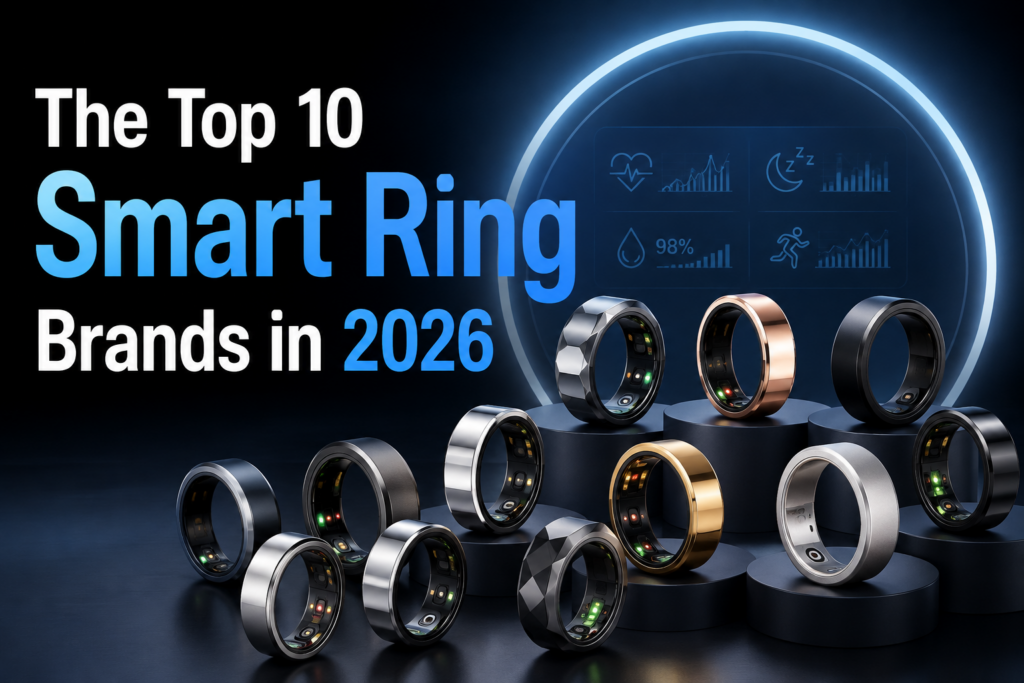
The current market landscape shows a clear pattern of one dominant leader and multiple strong competitors:
- Oura has established a leading position through years of technology development and a large health data ecosystem.
- RingConn and other emerging brands are expanding rapidly through global distribution strategies and competitive pricing.
- Samsung, Ultrahuman, and Amazfit are leveraging their consumer electronics ecosystems and specialized health applications to strengthen their market presence.
- Dreame, Meizu, Black Shark, and other cross-industry players are exploring differentiation through AI capabilities, interaction methods, and unique product features.
At the same time, the smart ring industry is experiencing increasing price competition. As consumers become more focused on data accuracy, user experience, and brand credibility, companies relying solely on low-cost manufacturing will face increasing challenges.
Market Leaders: The Core Players Defining the Industry
No.1 Oura — The Benchmark Brand in Smart Rings
Market Position
Oura is currently one of the most influential brands in the global smart ring market. With more than a decade of technology development, accumulated health data, and a mature user ecosystem, Oura has built a strong competitive advantage.
The Oura Ring 4 has maintained strong visibility in the U.S. smart ring market and continues to attract significant consumer attention.
Key Strengths:
1. Long-Term Technology Development
Since launching its first-generation product in 2013, Oura has continuously improved sensor technology, algorithms, and user experience, creating a significant first-mover advantage.
2. Smart Sensing Technology
Oura uses multi-sensor integration and dynamic signal optimization to improve data accuracy and consistency across different users and wearing conditions.
3. Hardware + Software Subscription Model
Through its subscription-based service model, Oura goes beyond hardware sales by providing continuous health insights and personalized wellness services, creating long-term user engagement.
Latest Product:
The Oura Ring 4 starts at around $349 and is available in titanium and ceramic versions. It offers approximately 5–8 days of battery life and water resistance for everyday use.
No.2 Samsung — A Powerful Entry from the Consumer Electronics Giant
Market Position
As one of the world’s leading consumer electronics companies, Samsung’s entry into the smart ring market has accelerated industry development.
The launch of Galaxy Ring is widely considered an important milestone, helping move smart rings from specialized health devices toward broader consumer adoption.
Key Strengths:
1. Ecosystem Integration
Galaxy Ring can connect with Samsung smartphones and smartwatches, allowing users to integrate health data across multiple devices.
2. Global Distribution Advantage
With extensive retail channels and strong brand recognition, Samsung can quickly reach a large consumer base.
3. Technology Integration Capability
Samsung’s experience in sensors, chips, batteries, and mobile ecosystems provides a strong foundation for smart ring development.
Emerging Competitors: Differentiation in a Growing Market
No.3 RingConn — A Globally Expanding Smart Ring Brand
Market Position
RingConn is one of the fastest-growing smart ring brands in recent years. The company has expanded into multiple international markets and built a growing user base.
Its products have achieved strong performance in the U.S. market and maintain a competitive position in online smart ring rankings.
Key Strengths:
1. Health Data Tracking
RingConn provides monitoring features including:
- Heart rate tracking
- Blood oxygen monitoring
- Sleep analysis
and uses algorithms to generate health insights.
2. No Subscription Model
Compared with competitors using subscription services, RingConn adopts a one-time purchase model, making it attractive to users seeking lower long-term costs.
3. Comfortable Wearability
Lightweight design and extended battery life are important advantages of its products.
No.4 Dreame — An AI Hardware Newcomer
Market Position
With experience in smart hardware development, Dreame has expanded into AI wearable devices and is exploring opportunities in the smart ring market.
Its AI smart ring products have attracted attention at technology exhibitions, focusing on AI-driven health analysis and personalized experiences.
Key Strengths:
1. AI-Powered Health Analysis
By combining algorithm models with multiple sensor inputs, Dreame aims to provide smarter health management capabilities.
2. Extreme Miniaturization Design
One of the biggest challenges for smart rings is balancing sensors, battery capacity, and wearing comfort within an extremely limited space.
To support all-day wearable experiences, curved batteries are expected to become an important technology direction for smart rings and other compact wearable devices.
Compared with traditional flat rectangular batteries, curved batteries can better utilize the internal curved space of a ring, improve space efficiency, and reduce structural limitations during product design.
These highly customized battery solutions can help smart rings achieve thinner designs, improved comfort, and longer operating time.
No.5 Ultrahuman — A Specialist in Fitness and Performance Health
Market Position
Ultrahuman focuses primarily on fitness, recovery, and body performance management, gaining recognition among health-conscious and athletic users.
Key Strengths:
- Body recovery analysis
- AI-powered health recommendations
- Stress management and women’s health tracking
Compared with general-purpose smart ring brands, Ultrahuman places greater emphasis on sports performance optimization and personalized wellness scenarios.
Specialized Players: Differentiation Through Niche Applications
No.6 Tianyue Kangkang — Exploring the Health Alert Market
Market Position
Tianyue Kangkang focuses on health management scenarios, using long-term data collection and algorithm analysis to provide users with more personalized health trend insights.
Key Strengths:
1. Personalized Health Baseline Analysis
By continuously collecting user health data, the system builds an individual health baseline. When important indicators consistently deviate from the user’s normal range, it can provide alerts and personalized recommendations.
Examples include:
- Abnormal changes in blood oxygen levels during sleep;
- Unusual fluctuations in resting heart rate;
- Correlation analysis between activity changes and physical conditions.
2. Multi-Scenario Health Management
Beyond personal health monitoring, Tianyue Kangkang is also exploring family health management scenarios, such as monitoring health trends of elderly family members and enabling remote health data sharing.
No.7 Amazfit — A Key Player in Fitness and Health Ecosystems
Market Position
With years of experience in smart wearable devices, Amazfit has built a strong user base in the fitness and health sector. Its smart ring product, Helio Ring, represents the brand’s expansion into the smart ring market.
Key Strengths:
1. Fitness Recovery Management
Through data analysis, Amazfit helps users understand their physical recovery status and optimize training plans.
2. Sleep Health Analysis
By combining indicators such as blood oxygen levels and heart rate, Amazfit analyzes sleep quality and potential sleep-related issues.
3. Software Ecosystem Advantage
The Zepp App provides comprehensive data visualization and health management features, enhancing the overall user experience.
No.8 Meizu — Exploring Metabolic Health Insights
Market Position
Meizu’s smart ring focuses on lightweight design, comfortable wearing experience, and health data analysis.
Key Strengths:
1. Metabolic Health Trend Analysis
By continuously collecting data such as heart rate, body temperature, blood oxygen levels, and sleep patterns, combined with algorithm models, the device analyzes users’ health trends.
It is important to note that these technologies are mainly designed for trend analysis and health insights, rather than replacing professional medical testing.
2. Invisible Wearing Experience
Lightweight design and all-day wearability are becoming important competitive factors in the smart ring market.
No.9 Black Shark — Exploring New Smart Interaction Methods
Market Position
Black Shark entered the smart ring market with its background in gaming hardware and aims to differentiate itself through innovative interaction methods.
Key Strengths:
1. Gesture-Based Interaction
By recognizing finger movements, the smart ring enables device control and introduces new interaction possibilities beyond traditional wearable devices.
2. Long Battery Life Design
Through hardware optimization and improved charging solutions, Black Shark focuses on extending overall product usage time.
3. Basic Health Monitoring
The product provides common health tracking features, including:
- Heart rate monitoring;
- Blood oxygen measurement;
- Sleep tracking.
No.10 iQibla — A Successful Example of Vertical Market Positioning
Market Position
iQibla is a unique player in the smart ring market, focusing on religious lifestyle scenarios and gaining significant attention in the Middle East market.
Key Strengths:
1. Clear User Scenario Focus
The product is designed around specific user needs, including features such as prayer direction guidance and religious activity counting.
2. Scenario-Based Product Strategy
Unlike the highly competitive health monitoring market, iQibla has established its position by focusing on a specific user group and creating differentiated experiences.
Its development demonstrates that the future of smart rings may extend beyond health tracking. Brands that focus on specific user needs and create meaningful application scenarios can also build strong competitive advantages.
Future Outlook: Who Will Stay in the Smart Ring Game?
In 2026, the smart ring market is transitioning from a rapid growth phase into a period of deeper competition.
The future competition will no longer be simply about “whether a company can manufacture a smart ring”, but rather:
- Can it provide accurate and reliable health data?
- Can it solve the challenges of long-term wearing comfort?
- Can it deliver truly valuable AI-powered services?
- Can it achieve better hardware design within extremely limited space?
1. Health Data Capability Remains the Core Competitive Advantage
Leading brands such as Oura have demonstrated that hardware is only the entry point. The long-term value of smart rings comes from:
- Continuous data accumulation;
- Algorithm optimization;
- Comprehensive user services.
As the market matures, companies with stronger data capabilities and deeper user insights will have a significant advantage.
2. AI Will Push Smart Rings Into a New Era
Future smart rings may no longer be limited to health monitoring devices. Instead, they could become a new entry point for AI assistants.
Features such as:
- Voice interaction;
- Personalized health management;
- Intelligent reminders;
- Context-aware assistance;
will expand smart rings into broader application scenarios.
3. Battery Design Will Become a Key Technology Breakthrough
As AI capabilities continue to expand, smart rings will need to support more computing and sensing functions while maintaining an extremely compact form factor.
As a result, battery technology will become one of the most important factors influencing the overall user experience.
Future development directions may include:
- Ultra-thin lithium batteries;
- High energy density batteries;
- Curved batteries;
- Customized battery structures.
Among these technologies, curved batteries are particularly promising for smart rings because they can better fit the circular internal structure of ring-shaped devices. By improving space utilization, curved batteries can help manufacturers achieve more natural designs, enhanced comfort, and longer operating time.
Conclusion: Smart Rings Are Entering a True Competitive Phase
Smart rings have evolved from niche technology products into an important gateway connecting health management, AI services, and smart hardware ecosystems.
The future market will not belong only to the manufacturers offering the lowest prices, nor will it be dominated solely by companies with strong brand recognition.
Long-term winners will need to combine:
- Strong data capabilities;
- Continuous software innovation;
- Excellent industrial design;
- A deep understanding of user needs.
The competition happening at the fingertips has only just begun. The ultimate winners will be the brands that can truly solve user problems and seamlessly integrate technology into everyday life.
Email: [email protected]
Whatsapp: +86 18938252128
