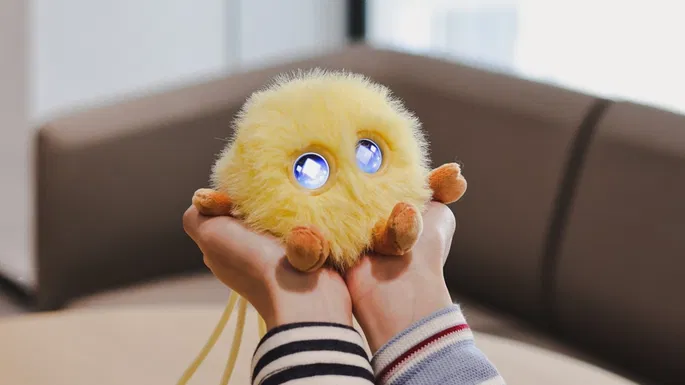
By the end of 2025, Huawei unexpectedly introduced an AI emotional companion robot called “Hanhan” at the Mate 80 launch event. Once it went on sale, it sold out almost instantly. Even on the second-hand market, prices doubled, yet the product was still hard to find.
This soft, cute, interactive plush AI pet looks like a toy that suddenly became popular. But in fact, it opened the door to a new trillion-dollar market — the mass adoption of AI toys.
While the market is busy discussing Hanhan’s emotional companionship value, one critical topic is often overlooked: the rapid growth of AI toys is forcing the battery industry to move beyond standard products. Custom, scenario-based, and form-specific battery solutions are becoming a key factor that defines the user experience of AI toys.
The Rise of AI Toys
For a long time, innovation in the toy industry focused mainly on appearance and simple feature upgrades. The introduction of AI has completely changed the nature of toys — shifting them from passive play to active companionship.
The success of Huawei’s “Hanhan” is not mainly about its cute plush design. Its real strength lies in the AI behind it. Powered by a large AI model, Hanhan can hold natural multi-turn conversations, recognize emotions, and respond through multiple interactions such as head-patting, shaking, and blowing. These features give a “cold electronic device” a sense of “warm emotional response.”
However, this breakout product also reveals the shared challenges faced by all AI toys:
the conflict between small size and powerful functions,
the tension between soft, cute designs and long battery life,
and the need to balance rich interaction with strict safety standards.
At the center of all these challenges is one critical component — the battery.
The Rise of AI Toys Breaks the Limits of Standardized Batteries
In the traditional toy era, batteries only needed to provide basic power. Standard rectangular or cylindrical batteries were enough to fit most products.
But the rise of AI toys has completely broken this “one-size-fits-all” power model.
Unlike traditional toys, AI toys are compact smart devices that combine AI computing, voice interaction, sensors, lighting, and motors. Their shapes are more flexible, their internal structures are more irregular, and their usage scenarios are far more diverse.
This means batteries are no longer just a “passive component that fits the product.” Instead, they must “actively integrate into the product,” and in many cases even help define the product’s form and user experience.
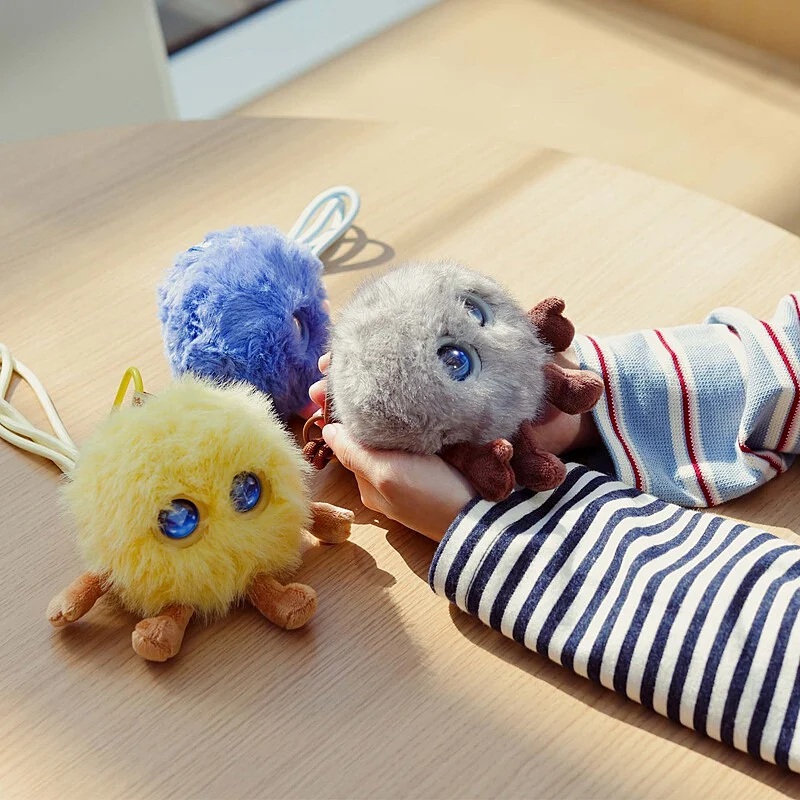
For example, AI toys like Huawei’s “Hanhan” use soft, rounded designs with irregular internal spaces. Traditional rectangular batteries can only be placed in corners, leading to low space utilization.
This is not just a single product issue — it is a common challenge across the entire AI toys industry, and also a key opportunity for custom battery solutions.
AI Toys Drive Three Key Trends in Custom Battery Development
The rapid growth of AI toys is driving three major shifts in the battery industry. These changes are not only reshaping battery form factors, but also redefining the relationship between batteries and smart hardware. As a result, they are creating unprecedented opportunities for the custom battery industry.
Extreme Space Constraints — Batteries Shift from “Fitting the Structure” to “Defining the Structure”
One of the core advantages of AI toys is their small, delicate, and soft design. However, this also creates extremely limited and irregular internal space. Inside these products, manufacturers must fit the main board, speakers, microphones, sensors, and other key components — all while maintaining a smooth, soft exterior feel. As a result, the space left for the battery is often fragmented and irregular.
This is where custom batteries show their true value.
In the future, AI toy design will no longer follow the traditional approach of “design the product first, then fit the battery.” Instead, it will shift toward “battery-first design,” where battery shape and product industrial design are defined together.
Irregular, curved, and ultra-thin custom batteries will become the standard for AI toys.
For example, for curved products like “Hanhan,” a curved pouch lithium battery can be designed to match the body shape. It can fill otherwise unused internal gaps, increasing space utilization to over 90%. Without changing the product size, battery capacity can be improved by 30%–50%, effectively solving battery life concerns.
This kind of tailor-made battery solution not only improves space efficiency, but also gives product designers greater freedom. It allows AI toys to keep their soft and cute appearance while still delivering strong and reliable battery performance.
Interaction Revolution — Batteries Become Part of “Safe Interaction”
Unlike traditional toys that are mainly used for one-way play, AI toys are built around two-way interaction. Actions such as patting the head, shaking, squeezing, hugging, or even slight dropping are all part of the user experience. This type of interaction places extremely high demands on battery safety and durability.
Traditional rigid batteries are not suitable for this kind of use. When compressed or bent, they may swell, leak, or even short-circuit and catch fire. This makes them unable to support the interactive nature of AI toys.
As a result, custom batteries must go beyond the basic function of “power supply” and become the first layer of safety protection for interaction.
First, ultra-thin pouch lithium polymer batteries are becoming the mainstream choice. They are more resistant to squeezing and bending, with no risk of explosion or swelling. This allows them to adapt to dynamic interactions like pressing and twisting, while also being lighter and thinner, helping maintain a soft and comfortable product feel.
Second, battery safety standards must be significantly upgraded. Since AI toys are often used by children and in home environments, a miniaturized BMS (Battery Management System) must be integrated. It should provide full protection against overcharge, over-discharge, overcurrent, short circuit, and temperature abnormalities, ensuring stable and safe operation even under intense interaction scenarios.
Long-Term Companionship — From “Battery Capacity” to a Full-Scenario Energy System
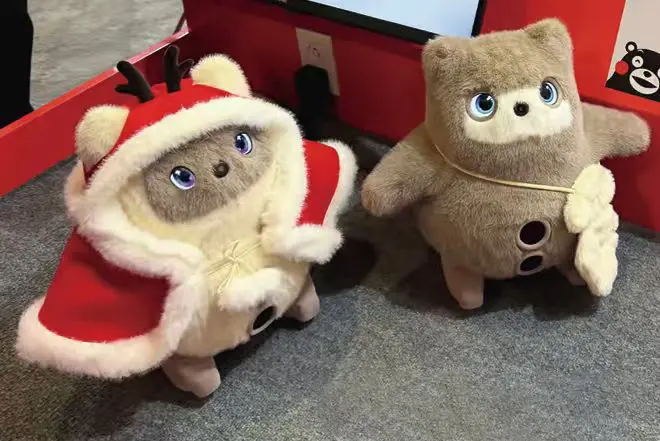
The core value of AI toys is emotional companionship. Users expect them to stay “always on,” working for days on a single charge, rather than shutting down after a few hours. However, the power consumption of AI toys makes long battery life a major challenge. Voice activation, real-time AI processing, sensors, and lighting all consume energy even in standby mode. Simply increasing battery size is not a practical solution for compact devices.
For example, Huawei’s “Hanhan” uses an 1800mAh battery. It can last about 6–8 hours under heavy interaction and around 48 hours in mixed use. While this is acceptable for daily use, it still falls short of the “all-day companionship” expectation.
This means improving battery life is not just about increasing capacity — it requires building a custom energy efficiency system.
On one hand, high energy density cells such as silicon-carbon anode lithium polymer batteries can be used. Compared to traditional cells, they can increase capacity by more than 20% in the same volume, enabling smaller size with higher performance.
On the other hand, multi-level power management is needed. The system should adjust power output based on usage scenarios:
- Low-power mode for standby to reduce energy loss
- Medium power for voice and interaction to ensure smooth performance
- Peak power for motors and lighting when high energy is needed instantly
More importantly, custom battery providers must evolve from simply supplying batteries to delivering complete energy solutions. This means integrating battery design, materials, BMS systems, product structure, and power optimization together. Only through this deep system-level collaboration can AI toys truly achieve “battery freedom” and long-lasting companionship.
Custom Battery Solutions: Capturing the Core Opportunity in the AI Toys Era
The viral success of Huawei’s “Hanhan” is not just a product win — it is a clear signal that the AI toys era has arrived. And this new market is naturally the main stage for custom batteries.
The diverse shapes, unique interactions, and demanding battery life requirements of AI toys make it impossible for standard batteries to meet their needs. Instead, custom, scenario-based, and form-fit battery solutions will become one of the key competitive advantages in this industry.
For battery manufacturers, the rise of AI toys is not an accidental opportunity, but a long-term trend.
In the past, competition in the battery industry focused on price and capacity of standardized products. In the future, the focus will shift to:
- Scenario adaptation ability
- Custom design capability
- Full-system energy solution integration
Companies that can understand AI toy use cases, and provide irregular, ultra-thin, flexible, high-safety, and high-energy-density custom battery solutions — and even participate in early product design with AI toy makers — will be the ones that lead this industry transformation.
Conclusion
The viral success of Huawei’s “Hanhan” marks the starting point of the AI toys era — and a new opportunity for the custom battery industry.
The rise of AI toys is pushing the battery industry to evolve. Custom batteries are no longer a supporting component; they are becoming a key factor in defining product experience and enabling new possibilities in smart companionship.
If you are developing AI toys and facing challenges in battery fit, battery life, or energy optimization, feel free to contact us for tailored custom battery solutions.
Email: [email protected]
Whatsapp: +86 18938252128
