2026 is a key year for China’s low-altitude economy, marking the shift from pilot projects to large-scale, regular operations. As airspace management reforms deepen, industry standards improve, and commercial use cases expand, the low-altitude economy is becoming a trillion-level growth engine.
Drones are the most widely used and mature platforms in this sector. Their performance limits directly define the efficiency and boundaries of low-altitude operations. As the “energy heart” of drones, power batteries play a critical role in overcoming key challenges such as flight time, payload capacity, and safety.
Overview of China’s Low-Altitude Economy Development
1. Policies and regulations are now in place
On July 1, 2026, the revised Civil Aviation Law of the People’s Republic of China officially came into effect. For the first time, it added a special chapter on promoting the low-altitude economy, confirming its strategic importance at the national level.
The new law defines classified airspace management below 300 meters:
- 0–120 meters is open flight airspace. Drones can fly after basic requirements such as real-name registration and remote ID are met.
- 120–300 meters is controlled airspace. Approval time has been shortened from 72 hours to within 2 hours, removing long-standing airspace approval barriers.
Earlier policy documents, such as the Low-Altitude Economy Standard System Development Guide (2025), have also been released. More than 150 cities across China have launched pilot programs, forming a complete policy system with national planning and local execution.
2. Market size enters the trillion-yuan level
According to data from China’s National Development and Reform Commission, the low-altitude economy is expanding rapidly. The market size is expected to exceed RMB 1 trillion by 2026 and reach RMB 3.5 trillion by 2035, becoming a new driver of economic growth.
The drone industry is the core growth engine. By 2026, China’s drone market is expected to exceed RMB 200 billion, with industrial drones accounting for over 60%. Annual growth remains above 25%, making it the most mature and commercially active segment of the low-altitude economy.
3. Multiple applications become standard operations
The low-altitude economy is now deeply integrated into real-world industries, with four major mature application areas:
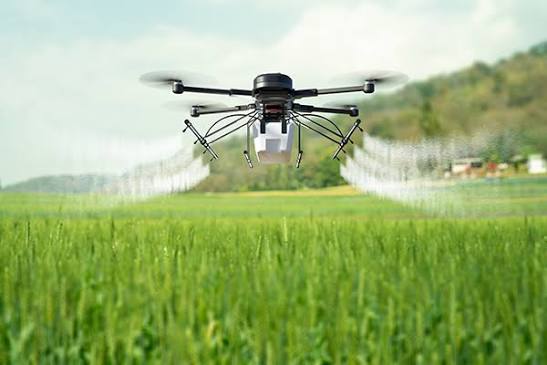
- Agricultural spraying: Drones are widely used for precise spraying and pest monitoring, supporting smart agriculture.
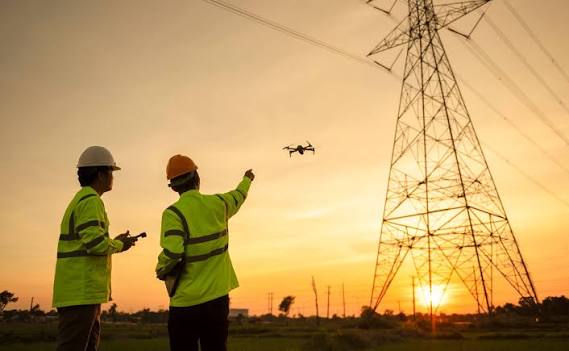
- Industrial inspection: Power grids, solar farms, and oil & gas pipelines use drones for regular inspections, replacing risky manual work and greatly improving efficiency.
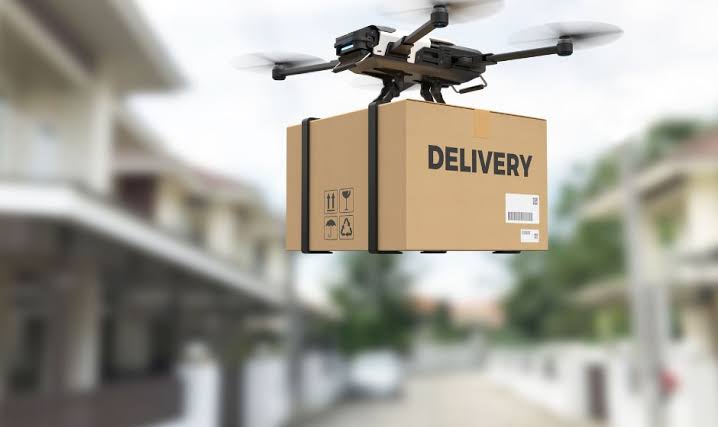
- Logistics and delivery: Urban last-mile delivery and short-distance logistics routes are being deployed, reducing delivery time within 3 km to just minutes.
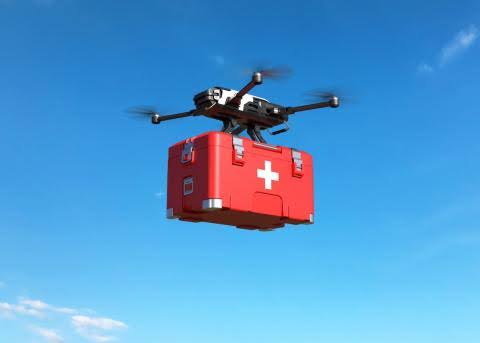
- Emergency rescue: Drones are now standard tools for disaster monitoring, supply delivery, and search-and-rescue missions.
What the Low-Altitude Economy Boom Means for Drone Manufacturers
The opening of a trillion-yuan market creates strong growth opportunities for drone makers, but it also raises the bar for product performance. The industry is entering a phase of clear differentiation.
1. New demand growth and rapid expansion of niche markets
Policy relaxation in the low-altitude economy is directly driving large-scale demand from enterprise (B-end) and government (G-end) users. Industrial operations and commercial delivery, once limited by airspace approval, are now moving from small pilot projects to regular, large-scale deployment.
At the same time, niche markets are growing fast. Demand is rising for heavy-lift logistics drones, high-altitude inspection drones, and firefighting and rescue drones. Instead of relying on general-purpose models, manufacturers can now build competitive advantage by focusing on specific application scenarios.
2. Higher competition threshold and performance limits of standard products
As the market expands, competition is shifting from price-driven to value-driven. Customers no longer ask only whether a drone can fly, but whether it can fly longer, carry heavier loads, work reliably in harsh environments, and maintain low failure rates.
The limits of standard battery solutions are becoming clear:
- Insufficient discharge rate, unable to support stable high-current output for heavy-load drones
- Energy density limits, resulting in short flight time and frequent battery swaps for long-range inspection or logistics
- Poor temperature adaptability, with strong performance drop in high heat, extreme cold, or high-altitude conditions
- Lack of application-specific BMS, leading to gaps in flight safety and data management
Breaking through power system limitations has become a key factor for drone manufacturers to enter the high-end market and stand out from competitors.
How BluePower Empowers the Upgrade of the Low-Altitude Economy
As a battery manufacturer for UAVs, BluePower relies on a strong core technology portfolio and moves beyond standard, one-size-fits-all products. Through full-spectrum customization, we act as a dedicated power partner for drone manufacturers, supporting the high-quality growth of the low-altitude economy at the technology level.
1. High-rate LiPo battery technology
Our ultra-low internal resistance cell design delivers high continuous discharge and strong peak power, meeting the dynamic power needs of UAV takeoff, hovering, acceleration, and heavy-load flight.
With stable voltage and smooth power output, our batteries prevent power drops or lag, ensuring reliable thrust for agricultural and logistics drones under full load. This greatly improves flight control stability and operational reliability.
2. High-voltage custom battery solutions
We offer multi-series high-voltage custom designs for medium and large industrial drones with long flight time and heavy payloads. By increasing system voltage, working current is reduced, which lowers heat and energy loss.
This approach improves power reserve and endurance at the same capacity, solving common issues of low-voltage systems such as weak power output and fast voltage drop during long-range missions.
3. Semi-solid-state high-energy-density batteries
As a next-generation power technology for low-altitude platforms, our semi-solid-state batteries provide over 30% higher energy density than traditional liquid lithium batteries, while enabling lighter drone designs.
They offer higher safety, longer cycle life, and wider temperature tolerance. Without adding battery weight, flight time is significantly extended, making them ideal for high-end industrial drones and heavy-lift platforms that demand both long endurance and high payload capacity.
4. In-house smart BMS (Battery Management System)
Our self-developed smart BMS enables real-time monitoring of voltage, current, temperature, SOC, and SOH, with full hardware protection against overcharge, over-discharge, overheating, short circuit, and overcurrent.
It also supports data tracking, early warnings, and battery health analysis, and can work closely with the flight control system. This greatly improves flight safety margins and intelligent maintenance for low-altitude operations.
5. High-efficiency fast-charging systems
Designed for high-frequency and commercial UAV operations, our custom fast-charging solutions significantly reduce charging time while protecting battery life.
This increases equipment uptime, improves operational efficiency, and lowers maintenance costs, making it well suited for large-scale, high-intensity drone missions.
How Custom Batteries Solve Core UAV Flight Challenges
Standard batteries built on a “one-size-fits-all” approach can no longer meet the diverse demands of low-altitude operations. Through deep customization, we directly address five key challenges faced by the UAV industry.
1. Extending flight time and increasing payload
For long-endurance and heavy-load missions, we use semi-solid-state, high-energy-density cells to maximize capacity within strict weight limits. At the same time, battery structure and layout are customized to fit the airframe, achieving optimal use of internal space. This effectively extends flight time and increases usable payload.
2. Ensuring stable power output
To handle dynamic conditions such as takeoff, gusty winds, and heavy loads, our high-rate LiPo batteries with ultra-low internal resistance provide smooth and stable discharge throughout the flight. This prevents vibration, power drop, and sudden voltage loss, ensuring stable performance in complex conditions.
3. Improving environmental adaptability
For harsh environments such as high temperatures, extreme cold, and high-altitude operations, we optimize cell chemistry, structural design, and BMS thermal control strategies. This expands the operating temperature range and ensures low capacity loss and stable discharge even in extreme environments.
4. Enhancing flight safety
We build a multi-layer safety system covering cell selection, structural protection, and intelligent BMS control. Cells undergo strict safety testing, while battery packs feature shock resistance, waterproofing, and anti-puncture design. Combined with real-time monitoring and protection from the smart BMS, flight risks are greatly reduced.
5. Reducing total lifecycle cost
Custom batteries are precisely matched to each drone’s operating profile, reducing unnecessary energy loss and significantly extending cycle life compared to standard batteries. In addition, the smart BMS enables health monitoring and fleet-level management, lowering long-term maintenance and replacement costs.
Conclusion
The legalized and large-scale development of China’s low-altitude economy is a key part of the country’s new growth drivers and brings long-term, stable opportunities to the UAV industry. The shift from pilot projects to wide adoption, and from general-purpose products to application-specific solutions, is inevitable. Power batteries are the core foundation supporting this transformation.
Looking ahead, we will continue to focus on custom power solutions for UAVs, closely following the evolution of low-altitude applications. By advancing semi-solid-state, intelligent, and high-safety battery technologies, and working closely with drone manufacturers from early-stage development, we aim to deliver customized, high-performance, and highly reliable power systems. Together with our partners, we strive to build strong differentiation and drive the high-quality growth of China’s low-altitude economy.
If you are developing drones for agriculture, logistics, inspection, or emergency response and need a custom battery solution to extend flight time, increase payload, and improve safety, contact us to discuss your UAV power requirements.
Email: [email protected]
Whatsapp: +86 18938252128
