From Smart Glasses to Robotics, from Consumer to Industrial
– Custom Shaped Batteries as the Invisible Foundation of Physical AI
On the opening day of CES 2026, Las Vegas sent a clear and powerful signal to the global tech industry:
AI is no longer merely a tool—it is becoming the “underlying operating system” of human life.
During his 90-minute keynote address, NVIDIA CEO Jensen Huang declared that “the ChatGPT moment for physical AI is imminent,” signaling AI’s transition from virtual realms into the physical world. Subsequently, AMD CEO Lisa Su announced humanity is entering the “Yottabyte Computing Era,” predicting a 1,000-fold increase in AI chip performance over the next four years.
From information exchange and home life to transportation and industrial systems, CES 2026 revealed a clear trajectory:
AI is making the leap from “capability demonstration” to “embedded productivity.”
Information Interaction is Being Redefined
Smart Glasses Move Toward “Phone-Free” Functionality
If the past two decades defined smartphones as the gateway to information, CES 2026 marked the first glimpse of smart glasses poised to take the reins.
Over 50 AI/AR eyewear manufacturers collectively showcased their innovations, with lightweight designs, all-day wearability, and multimodal interaction emerging as industry consensus. “The next phone may not be a phone” is no longer just a marketing slogan.
IDC data indicates the global smart glasses market will experience explosive growth in 2025, reaching a critical inflection point for scale in 2026. China is emerging as one of the most vital hubs for innovation and manufacturing.
At this year’s CES, Chinese manufacturers have made a particularly strong showing.
Rokid showcased its mass-produced AI+AR glasses, which look nearly indistinguishable from ordinary eyewear and weigh around 50 grams. They support high-frequency functions like photography, translation, navigation, and AI question-answering. Meanwhile, INMO continues to advance its lightweight all-in-one approach, differentiating itself through aesthetic design and real-time translation capabilities.
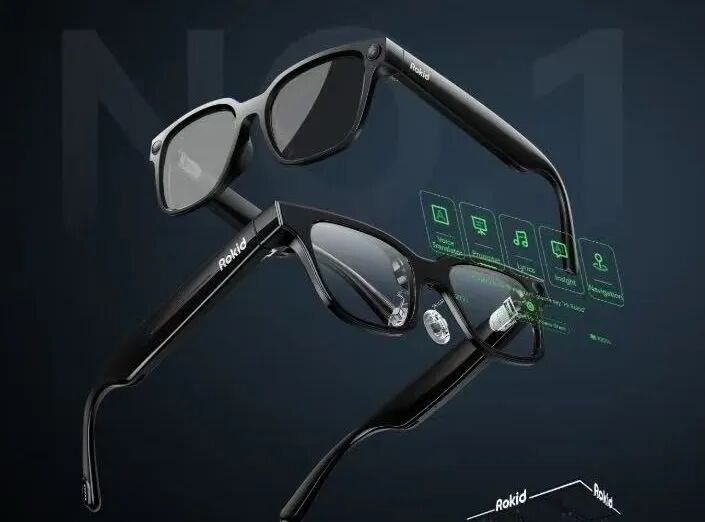
But behind this race for “extreme lightweighting,” a long-overlooked yet crucial variable is emerging—the evolution of the energy system itself.
When smart glasses need to be worn all day, and available space is compressed into highly irregular structures like temple arms, nose pads, and curved frames, traditional rectangular batteries become difficult to accommodate. An increasing number of manufacturers recognize that the true limitation on AI glasses’ user experience lies not solely in chip computing power or algorithmic capabilities, but in the ability to safely and stably deploy battery systems within extremely limited and non-standard structural spaces.
This shift is propelling shaped batteries from niche custom solutions into one of the key foundational capabilities for AI wearables. Batteries are no longer passive components passively embedded into products; they have become core elements directly participating in the design of product form factors.
AI as an Extension of Humanity
From Cleaning and Growth to Sleep and Work
At CES 2026, another key theme for AI is its comprehensive integration into daily life—no longer confined to screens.
Home Scenarios: From Tools to “Embodied Intelligence”
Home cleaning robots are making the leap from two-dimensional to three-dimensional spaces. Stair-climbing vacuum cleaners, robotic lawn mowers with mechanical arms, and self-charging pool cleaners signal the evolution of service robots toward “embodied intelligence.”
Brands like Ecovacs and Yunjing showcased next-generation flagship products at CES, enhancing object recognition, scene understanding, and personalized modes (e.g., baby/pet care, ultra-quiet operation). In outdoor settings, Chinese brand Kumai Technology leads globally in boundary-free lawn mowing robots.
As robots evolve from single-function devices into multi-task intelligent agents, their internal structures grow increasingly complex. Multi-sensor, multi-actuator, and high-degree-of-freedom designs necessitate deep integration between energy systems and mechanical structures. In this process, custom shaped batteries offer greater design freedom for robotic forms, becoming a crucial foundation for product innovation.
Growth and Companionship: AI Enters the Real World
Teeni.AI debuted at CES 2026 with Mooni Pro, an AI companion robot designed for teenagers. Equipped with cameras and voice recognition to understand real-world environments, this product aims to make AI a tool for children to explore the world—not a substitute for parents or a screen-bound distraction.
Common traits of companion AI devices include:
Compact size, high usage frequency, and the need for long-term stable operation, coupled with stringent safety requirements. These demands are driving energy systems away from “standardization” toward “structural adaptation,” enabling batteries to truly integrate into the device’s form factor itself.
Sleep and Brain Health: Brain-Computer Interfaces Enter the Consumer Market
Chinese neurotechnology brand LumiMind has launched LumiSleep, a real-time brainwave-regulated sleep device, marking the official entry of brain-computer interface technology into the consumer market. Unlike traditional “monitoring-type” sleep products, LumiSleep actively guides the brain into sleep through millisecond-level EEG data collection and personalized acoustic interventions.
When devices require close-fitting, prolonged wear near the head, the form, safety, and stability of battery systems become critical. Compared to standard batteries, solutions that conform to human contours and enable flexible or irregular shapes significantly enhance wearability and reduce potential risks. This makes irregular-shaped batteries increasingly valuable in wearable medical and brain health devices.
Workplace Scenario: AI as the “Seamless Assistant”
Workplace Scenario: AI as the “Seamless Assistant”
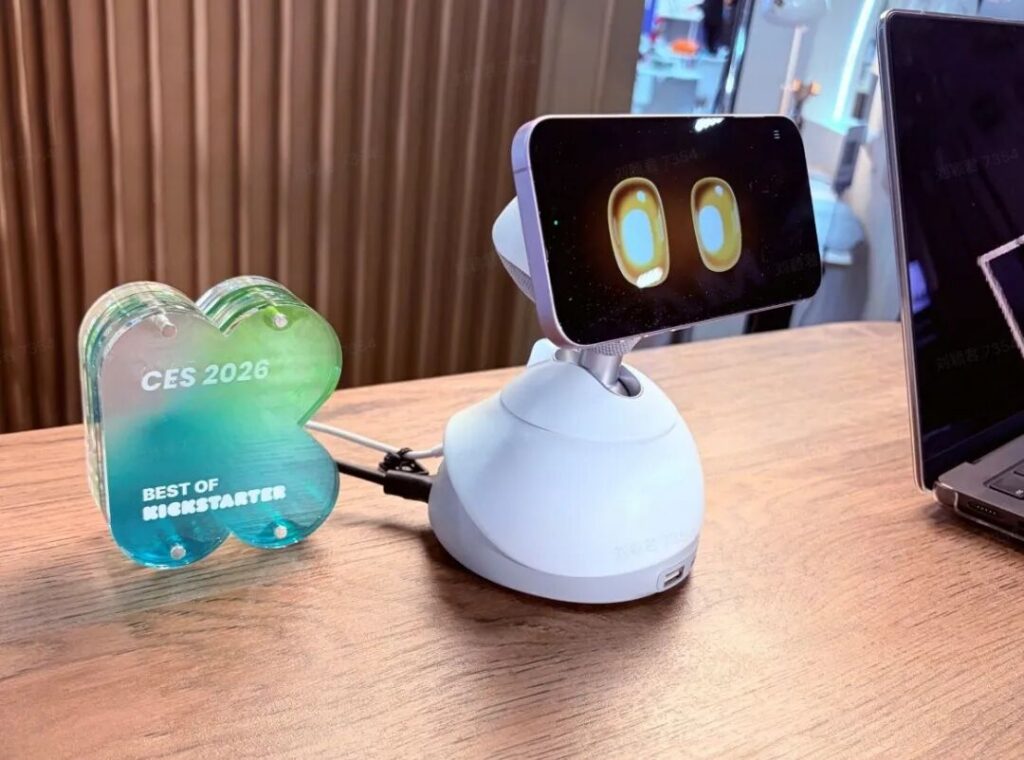
The LOONA DeskMate desktop assistant robot released by CanTech transforms AI from “passive response” to “proactive understanding.” It assists with emails, meetings, and schedules while providing emotional companionship beyond work hours.
This desktop-level AI hardware emphasizes long-term online presence and emotional interaction, requiring its energy system to achieve high stability and safety within a compact form factor. The AI’s sense of companionship fundamentally relies on a dependable physical foundation.
Mobility and Industrial Infrastructure
AI is Reconstructing Systems, Not Just Individual Functions
At CES 2026, AI’s transformation in mobility and industrial sectors was more subtle yet carries greater long-term significance.
Black Sesame Technologies showcased its Huashan series chips for assisted driving and its Wudang series solutions enabling integrated cockpit-driving systems. Related technologies have already achieved mass production across multiple automakers. Simultaneously, its computational platform in embodied intelligence provides foundational computing power for commercial robot deployment.
Daotong Technology showcased autonomous charging robots and embodied cluster inspection solutions, achieving a complete closed-loop from perception to decision-making and execution. It also explored energy solutions for the AI era through V2G technology.
In industrial robotics, aigo’s light-field-based perception solution endows robots with spatial understanding capabilities closer to human vision.
As robots transition from fixed workstations to multi-degree-of-freedom, multi-form deployments, energy systems must evolve accordingly. Shaped batteries are no longer merely “special custom parts” but are increasingly becoming critical components supporting robotic structural flexibility and system reliability.
Conclusion
At CES 2026, we witnessed a clear shift:
AI hardware innovation is increasingly moving beyond algorithms and computing power, venturing into the deeper waters of “physical foundational capabilities.”
As a company specializing in custom shaped battery solutions, we participated in this year’s CES, showcasing tailored battery designs for AI wearables, robots, and smart terminals.
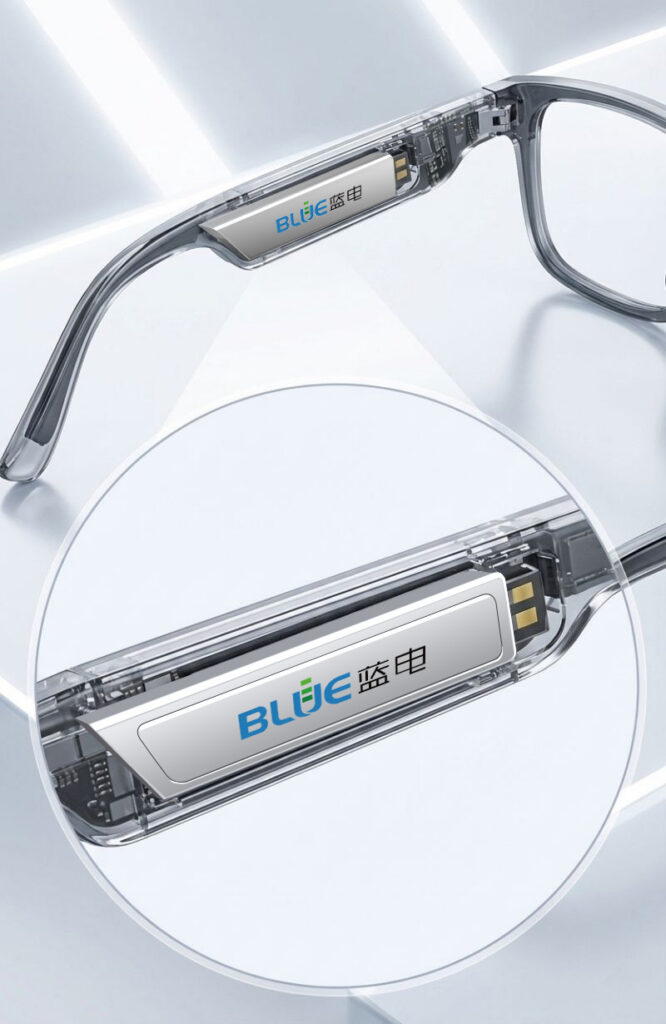
These solutions aren’t about “showcasing technical prowess,” but are designed around real product forms, structural spaces, and long-term usage safety.
As AI moves beyond screens into the real world, batteries are no longer just hidden standard components inside devices. Instead, they are being redefined alongside product form factors and user experience.
If you’re seeking suitable battery solutions for non-standard structures, curved spaces, or uniquely shaped devices, we’d be happy to engage in design discussions for appropriate scenarios.
Email: [email protected]
Whatsapp: +86 18938252128
