Humanoid robots are moving from labs to real-world use, but their power systems are still limited by energy density and heat dissipation. Traditional liquid lithium batteries are close to their performance limits and struggle to handle heat under heavy loads, which slows large-scale commercialization.
Experience from 2025–2026 shows that improving a single technology is no longer enough. Real progress requires a combined approach, including new battery chemistries, redesigned thermal management, integrated battery structures, and smarter energy-management algorithms. The combination of solid-state batteries, bio-inspired cooling, CTC structural design, and AI-based efficiency control has already improved battery life and heat control in some advanced humanoid robots, laying the groundwork for industrial-scale production between 2027 and 2030.
Energy Bottlenecks and Industry Challenges of Humanoid Robot Battery
The commercialization of humanoid robots is essentially a process of pushing engineering limits under “human-like form constraints.” Robots must move with human-level flexibility while fitting batteries, safety systems, and cooling solutions into a very limited body space. This is not a minor technical issue, but a core barrier that separates laboratory prototypes from real-world deployment.
1.1 Range Anxiety: The Structural Conflict Between Energy Density and Weight
Today’s humanoid robots generally cannot meet the endurance needs of real industrial or service applications.
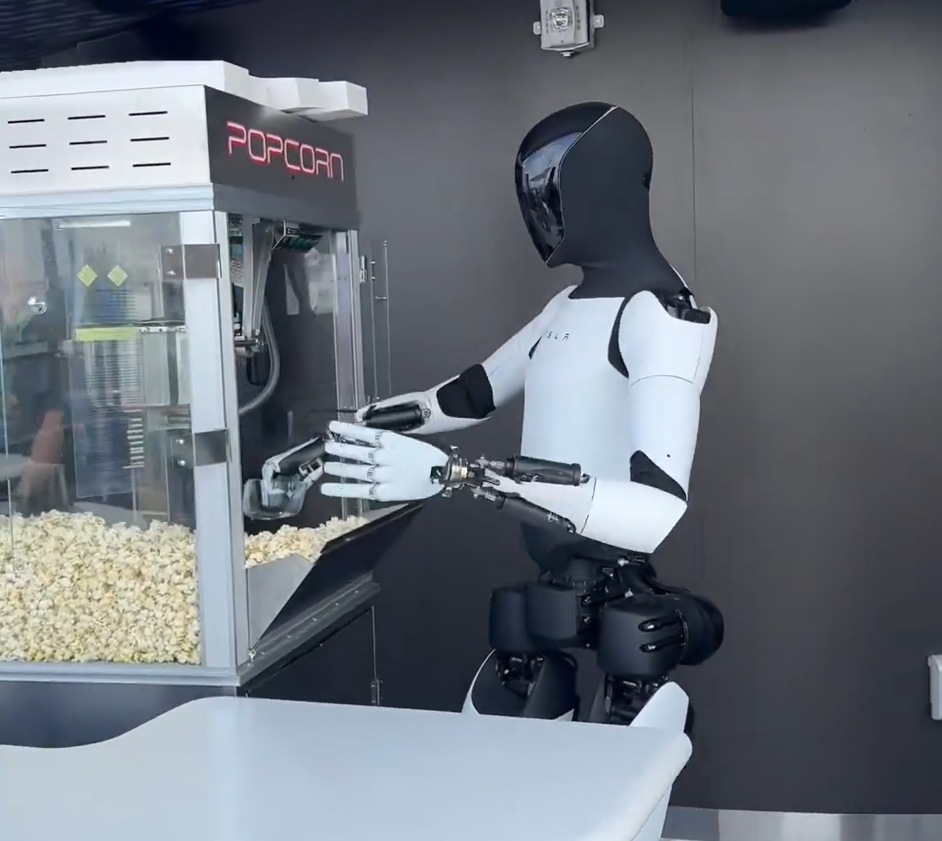
Tesla Optimus Gen3 uses a 2.3 kWh lithium iron phosphate battery and can run for 8–10 hours under light workloads.
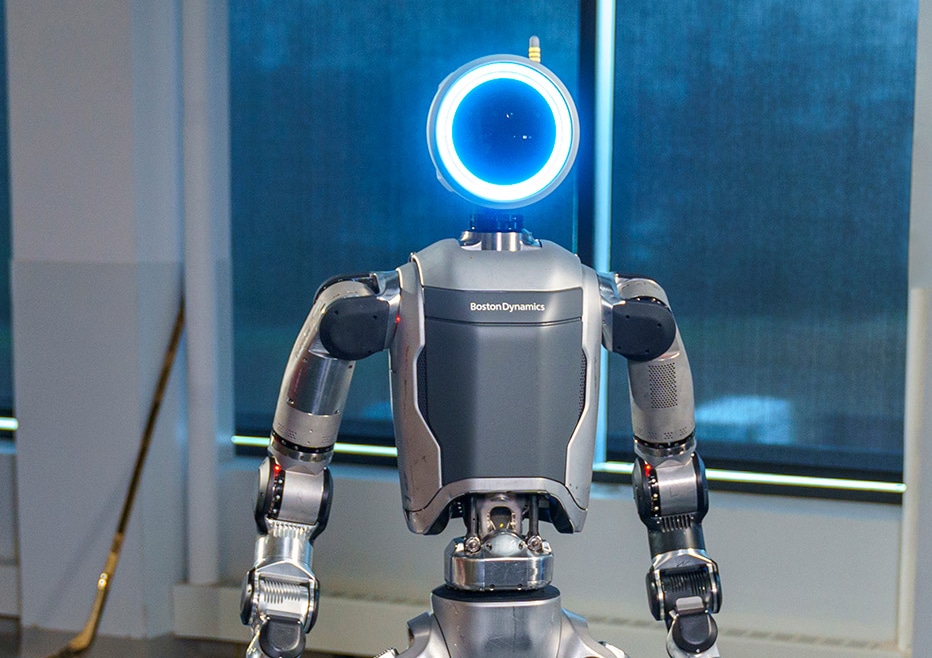
Boston Dynamics Atlas has stronger mobility, but its 4 kWh battery sees a sharp drop in operating time under heavy load.
Unitree H1 has an operating time of less than 2 hours, which is far from enough for continuous tasks.
The root cause is the rigid trade-off between energy density and weight. Traditional liquid lithium batteries are already close to their practical limit of about 300 Wh/kg. At the same time, a humanoid robot’s torso usually can only hold 2–3 kWh of battery capacity. Battery weight typically accounts for 10%–20% of the total robot mass. More weight increases motor load, which raises power consumption and creates a vicious cycle: heavier batteries consume more energy, which then requires even larger batteries.
1.2 Cooling Crisis: Failure Risks Under High Power Density
Compared with endurance, heat management is an even more critical weakness. A humanoid robot usually has around 30 joints. During high-torque motion, a single joint motor can reach kilowatt-level power output, while heat is trapped in spaces only a few millimeters wide.
Tests show that joint motor temperatures can exceed 100°C within a short time. This accelerates insulation aging, weakens permanent magnets, and causes rapid torque loss or even safety failures.
This problem became clear during the 2025 Beijing Yizhuang Humanoid Robot Half Marathon. About 30% of the robots showed performance decline due to overheating, and some failed near the finish line because of joint malfunction. This exposed the limits of traditional cooling methods in long-duration, high-load operation.
1.3 Industry Consensus: Cooling Comes Before Endurance
The industry now agrees that cooling and endurance are the two biggest obstacles to humanoid robot commercialization, with cooling being the more urgent issue. Competition data shows that as liquid cooling solutions are gradually adopted, the failure rate caused by overheating has dropped significantly, proving the critical role of thermal management.
Research institutions further point out that cooling and endurance together account for over 40% of the total impact on humanoid robot commercialization. In other words, without real breakthroughs in thermal and energy systems, even the most advanced control algorithms and sensors cannot ensure stable operation in real-world environments.
Iteration of Battery Chemistry and Materials Science
Upgrading battery chemistry is the most fundamental way to overcome the limits of battery life, safety, and size in humanoid robots.
From 2025 to 2026, global R&D has focused on high energy density systems and high thermal stability materials, with all-solid-state batteries widely seen as the most reliable long-term solution.
All-Solid-State Batteries: A Key Breakthrough in Energy Density and Safety
All-solid-state batteries replace liquid electrolytes with solid electrolytes. This greatly improves safety and increases energy density to 400–520 Wh/kg, making them a major breakthrough for humanoid robot power systems.
Key research and industry players include:
- CATL (Contemporary Amperex Technology Co., Limited)
CATL is developing all-solid-state batteries designed specifically for humanoid robots. In nail penetration tests, temperature rise is much lower than in liquid batteries. The single-cell energy density reaches about 450 Wh/kg, and the technology has entered engineering validation and customer sampling stages. - Farasis Energy
Farasis has launched a 60Ah sulfide-based all-solid-state battery with an energy density of up to 520 Wh/kg. Its pilot production line was completed in 2025, with a focus on industrial and high-load humanoid robots. - Samsung SDI
Samsung SDI introduced the “SolidStack” pouch-type all-solid-state battery. It uses an anode-free design, allowing higher energy density in a thinner and lighter structure, which fits well into the limited space of robot bodies.
Exploration of New Battery Chemistries
In addition to all-solid-state batteries, several emerging battery systems are being developed by research institutes and battery companies to achieve even higher energy density.
- Lithium Metal Batteries
Researchers at Westlake University developed an anode-free lithium metal battery. By simplifying the battery structure, it achieves a mass-production-level energy density of 508 Wh/kg, supporting lightweight robot designs. - Lithium–Sulfur Batteries
Argonne National Laboratory, together with University of Chicago, developed an all-solid-state lithium–sulfur battery. After 450 cycles at room temperature, it still retains over 80% capacity. With a theoretical energy density of 2,600 Wh/kg, lithium–sulfur batteries are considered a long-term ultimate solution. - Semi-Solid-State Batteries
Tailan New Energy has developed semi-solid-state batteries that operate stably from –40°C to 80°C. Even in extreme environments, they maintain over 90% discharge efficiency, making them suitable for near-term robot applications.
At present, these new systems still face challenges such as limited cycle life, sensitivity to vibration, and manufacturing consistency, and require further optimization before large-scale commercialization.
Key Innovations in Anode Materials and Electrolytes
Beyond battery systems, anode materials and electrolytes play a critical role in real-world robot performance, especially under high load and frequent start-stop conditions.
Pre-Lithiation Technology
Pre-lithiation methods, promoted by several leading battery companies, improve first-cycle Coulombic efficiency to over 95%. This technology has already been applied at scale in some semi-solid-state batteries.
Silicon-Based Anodes
BTR introduced a silicon–carbon–lithium metal composite anode. With carbon coating technology, volume expansion is controlled to below 15%, increasing battery energy density by 15–30% and significantly extending operating time.
Polymer and Composite Solid Electrolytes
Tsinghua University developed a cross-linked polymer electrolyte that remains stable at 120°C.
Shanghai Jiao Tong University developed a MOF-based composite polymer electrolyte that operates stably from 0–100°C, solving the low-temperature conductivity problem of solid electrolytes.
Thermal Management Innovation: From Passive Cooling to Intelligent Control
Heat dissipation is one of the main limits for humanoid robots. Under tight, human-like space constraints, traditional air cooling no longer works.
From 2025–2026, thermal systems are moving from passive cooling to active and intelligent temperature control.
Passive Cooling: The Foundation
Passive cooling uses advanced materials to spread and buffer heat without extra power.
- High thermal interface materials improve heat transfer between chips, batteries, and structures.
- Phase change materials absorb short-term heat peaks and reduce temperature fluctuation.
Passive solutions work for low to medium loads, but are not enough for high-speed or heavy-duty operation.
Active Cooling: The Core Solution
For high power and continuous operation, liquid cooling has become the main approach.
- Liquid cooling is far more efficient than air cooling and fits into compact robot bodies.
- It enables long hours of high-load operation and greatly reduces overheating.
- Flexible liquid cooling designs can move with joints, solving cooling problems in moving parts.
By lowering operating temperatures, active cooling can extend the lifetime of motors and key components by 2–3×.
Intelligent Thermal Management: The Next Step
Thermal systems are becoming smart and predictive.
- AI models predict heat buildup in advance and adjust cooling in real time.
- Cooling power is matched to actual workload, reducing energy waste.
- Early warning systems improve safety by detecting thermal risks before failure.
Cooling on demand, rather than constant cooling, is now the main direction for humanoid robot thermal management.
Conclusion
Over the next five years, humanoid robots will evolve from “laboratory toys” into real industrial tools.
Industrial applications will be the first to scale, service scenarios will follow gradually, and home use will remain a long-term goal.
The speed of this transition will largely depend on advances in thermal management and battery life. Only when humanoid robots can operate reliably for more than 8 hours in real-world conditions, while keeping costs at a reasonable level, will they truly enter everyday life and become practical assistants and partners for humans.
If you are developing humanoid robots for industrial or service applications and are facing challenges in battery life, thermal control, or system integration, now is the time to plan ahead.
We specialize in custom lithium battery solutions designed for high-load, long-duration, and compact robotic systems. From battery chemistry optimization to thermal-aware pack design, we help robot manufacturers turn advanced concepts into reliable, scalable products.
Contact us to discuss your humanoid robot power solution:
Email: [email protected]
Whatsapp: +86 18938252128
