As demand grows for faster charging and higher power output, high C rate battery design has become increasingly critical in compact and performance-driven devices. Among various cell manufacturing approaches, stacking cells stand out as the preferred solution, offering lower internal resistance, improved current distribution, and superior thermal stability under high charge and discharge rates.
What is a Stacked Battery?
A stacked battery is a type of battery made by layering the internal components—like the cathode, anode, and separator—flat on top of each other, instead of rolling them up like a jelly roll.
In simple terms, instead of being wound into a spiral, the battery layers are neatly stacked. This design creates shorter and more direct current paths, which helps reduce internal resistance, manage heat better, and deliver higher power. That’s why stacked batteries are often used in high C-rate applications, compact devices, and advanced wearables where performance and space efficiency really matter.
Why High C Rate Battery Design Favors Stacking Cells?
The reason why stacking technology is more suitable for high C-rate charging and discharging in lithium batteries mainly lies in its unique advantages in structural design, current distribution, and thermal performance. The key reasons are as follows:
1. Uniform Electron Pathways and Low Internal Resistance Structure
Stacking technology forms a regular layered structure by alternately stacking the cathode, anode, and separator. This results in a larger and more uniformly distributed contact area between electrode layers.
Advantage:
Compared with the curved edges found in winding processes, stacked structures reduce the complexity and length of current paths. This significantly lowers overall internal resistance, minimizing energy loss and polarization during high C-rate charge and discharge, and thereby improving efficiency.
2. Optimized Heat Dissipation and Thermal Management
The interlayer spacing in stacked structures is more uniform, allowing heat to be rapidly conducted and dispersed along the planar direction, effectively preventing localized overheating.
Practical impact:
During high-current operation, internal heat generation increases. The superior thermal performance of stacked batteries helps suppress temperature rise, reduces the risk of thermal runaway, and extends cycle life.
3. Enhanced Mechanical Stability and Stress Distribution
The planar stacking method reduces stress concentration at electrode edges, enabling more uniform expansion and contraction of electrodes during charge and discharge cycles.
Resistance to deformation:
This avoids issues common in winding structures, such as microcracks or active material detachment at bent regions, improving structural stability under high C-rate conditions.
4. Efficient Utilization of Active Materials and Uniform Conductive Networks
Stacking technology makes it easier for conductive additives (such as carbon nanotubes or graphene) to form three-dimensional conductive networks, enhancing both electron and ion transport.
Reduced polarization:
Improved electrode material utilization and more complete contact between active materials and the electrolyte lower interfacial impedance, supporting rapid lithium-ion insertion and extraction.
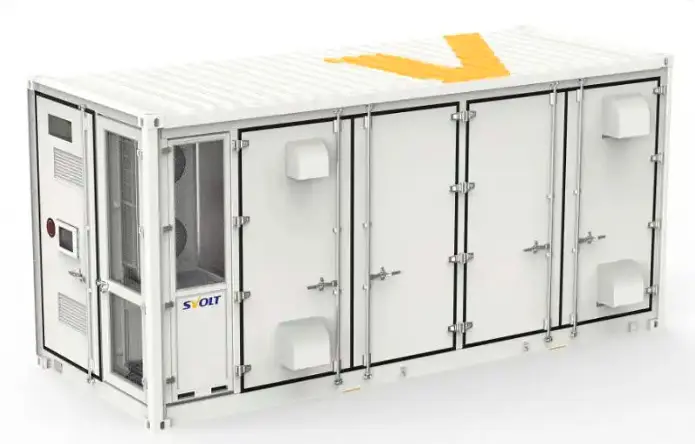
Among stacking processes, the most well-known is SVOLT Energy’s “Flying Stacking” technology. It adopts a model of pre-cut electrodes combined with multi-station parallel stacking. Through high-speed motion platforms and precision positioning systems, electrode sheets are rapidly picked, accurately aligned, and stacked.
This technology achieves a stacking speed of 0.125 seconds per sheet, improving efficiency by over 200% compared with traditional stacking processes. Conventional stacking typically operates at around 0.5–1 second per sheet, while Flying Stacking breaks this limit, reaching 0.125 seconds per sheet—approaching the speed of winding processes (approximately 0.1 seconds per sheet), while still retaining the performance advantages of stacked cell structures.
How Stacked Design Reduces Internal Resistance at High C Rates
At high C rates, internal resistance directly affects voltage stability, heat generation, and power output. Stacked battery designs reduce internal resistance in several simple but important ways.
Shorter and More Even Current Paths
Stacked cells use flat, layered electrodes instead of a rolled structure. This shortens the path for current flow and allows current to spread more evenly across the electrodes. As a result, electrical losses are lower during high-current discharge.
Lower Tab and Contact Resistance
Stacked designs make it easier to use wider and shorter tabs. This reduces resistance at the current collection points and improves efficiency during high-current pulses. Wound cells, in comparison, require longer current paths from inner layers to the tabs.
More Stable Ion Transport at High Load
The uniform structure of stacked cells helps lithium ions move more smoothly during fast discharge. This limits polarization and prevents internal resistance from rising too quickly, especially in small, high-power batteries.
Thermal Advantages of Stacked Batteries Under High Discharge
Thermal performance becomes critical when a battery operates at high C rates. As discharge current increases, heat generation rises sharply, and how efficiently that heat is managed directly affects performance, cycle life, and safety.
Heat Generation Under High C-Rate Discharge
At high C rates, heat is mainly generated by internal resistance and polarization losses. Even a small increase in resistance can lead to rapid temperature rise during high-current pulses. If heat cannot be removed efficiently, battery temperature climbs quickly, accelerating aging and reducing usable power.
Why Wound Cells Trap Heat More Easily
Wound cells use a tightly rolled structure, which limits heat dissipation from inner layers. Heat generated deep inside the roll must travel a longer path to reach the outer surface. Under high discharge, this often leads to localized hot spots that are difficult to detect and control.
In addition, uneven current distribution in wound cells can further concentrate heat in specific regions, making thermal management more challenging at high C rates.
Layer-by-Layer Heat Spreading in Stacked Cells
Stacked batteries use flat, layered electrodes that spread heat more evenly across the cell. Heat generated in each layer can dissipate directly through adjacent layers, creating shorter and more uniform thermal paths.
This structure reduces hot spots and keeps temperature rise more consistent across the entire cell, which is especially important for compact batteries operating under high load.
Impact on Cycle Life and Safety
Lower and more uniform operating temperatures help slow down electrode degradation and electrolyte breakdown. As a result, stacked batteries typically maintain performance more consistently over repeated high C-rate cycles.
Better thermal behavior also improves safety by reducing the risk of thermal runaway caused by localized overheating, making stacked designs a safer choice for high-power, space-constrained applications.
High C Rate Applications That Benefit Most from Stacked Cells
Stacked battery designs are especially well suited for applications that require high power output in limited space. These applications often involve short, high-current pulses where low internal resistance and good thermal control are critical.
Typical examples include smart wearables such as smart rings and fitness trackers, where space is extremely limited but peak current demand is high. Medical devices and compact robotics also benefit from stacked cells due to their stable performance and improved safety under high discharge conditions.
Drones and other portable equipment that rely on burst power for acceleration or lift can also take advantage of the fast current response and reduced voltage drop provided by stacked battery designs.
How Custom Stacked Battery Design Enables Higher Performance
High C-rate performance is not only determined by cell chemistry or structure, but also by how well the battery matches the actual application. Custom stacked battery design allows key parameters to be optimized around real operating conditions rather than generic specifications.
Tailoring C-Rate to the Actual Load Profile
Many devices do not draw constant current. Instead, they operate with short, high-current bursts followed by low-power standby periods. Custom stacked designs can be tuned to handle these peak loads efficiently by optimizing electrode thickness, tab design, and internal resistance for the specific C-rate profile required by the device.
This approach reduces unnecessary stress on the battery and improves both performance and lifespan under real-world usage.
Optimizing Shape for the Device Enclosure
Stacked cells offer greater flexibility in size and shape compared to wound designs. Custom formats can be developed to fit the exact dimensions of the device enclosure, whether ultra-thin, curved, or irregular in shape.
Better space utilization allows designers to allocate more volume to active materials or thermal paths, directly improving power delivery without increasing overall device size.
Balancing Energy Density and Power Density
High energy density and high power density often involve trade-offs. Custom stacked battery design makes it possible to strike the right balance based on application priorities.
By adjusting layer count, electrode structure, and materials, designers can favor higher burst power, longer runtime, or a balanced combination of both—rather than compromising performance by relying on a one-size-fits-all cell.
Conclusion
High C-rate battery performance is strongly influenced by internal resistance and heat management. Stacked battery designs address both challenges by shortening current paths, improving heat dissipation, and maintaining more stable performance under high discharge.
While wound cells remain effective for many energy-driven applications, stacked designs are becoming the preferred choice for compact, high-power devices. As demand for smaller and more powerful electronics continues to grow, stacked batteries offer a clear path toward safer, more efficient high C-rate solutions.
BluePower specialize in custom stacked battery solutions designed around real load profiles, space constraints, and thermal requirements. By optimizing C-rate capability, cell structure, and form factor at the design stage, we help engineers achieve higher performance and longer battery life in demanding applications.
If your device requires high burst current in a compact or non-standard form factor, working with an experienced stacked battery partner early in the design process can make a measurable difference in performance and reliability.
Email: [email protected]
Whatsapp: +86 18938252128
